 Skip Navigation


Can Two Blue-Eyed Parents Have a Brown-Eyed Child?
April 14, 2026
- Related Topics:
- Appearance,
- Eye color,
- Pigmentation traits
A curious adult from Scotland asks:
"If both parents have blue eyes can we have a brown eyed child?"
The short answer is yes—it's possible, but uncommon. Even if both parents have blue eyes, they can have a brown‑eyed child. This happens because eye color is controlled by many genes, not just one.
How does eye color even work anyway?
Genes are tiny instructions inside your cells. You get half from your mom and half from your dad. Different versions of genes are called alleles. Some alleles tell the body to make more melanin, and others tell it to make less. Melanin is a pigment in the iris (the colored part of the eye). If you have lots of melanin your eye color will be brown, whereas if you have very little melanin, your eyes will be blue. If you have an intermediate amount, you may have green or hazel eyes depending on the specific type of melanin you make.
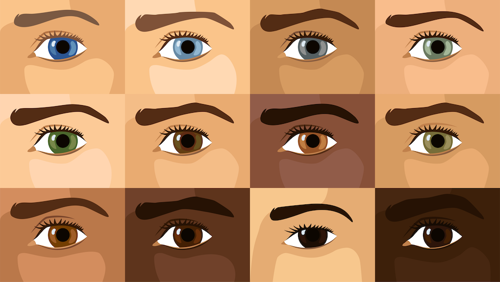
It may come as a surprise, but blue eyes don’t have blue pigment. They look blue because of how light scatters in the eye—similar to why the sky looks blue. This is a phenomenon called the Tyndall effect .1 Blue-colored eyes are an example of a structural color, rather than a color due to a pigment.
Not as simple as dominant and recessive!
For many years, it was taught that brown eye color was dominant and blue was recessive. This means that in order to have blue eyes, you would need to inherit two copies of the genetic variant responsible for blue eyes, one from each parent.
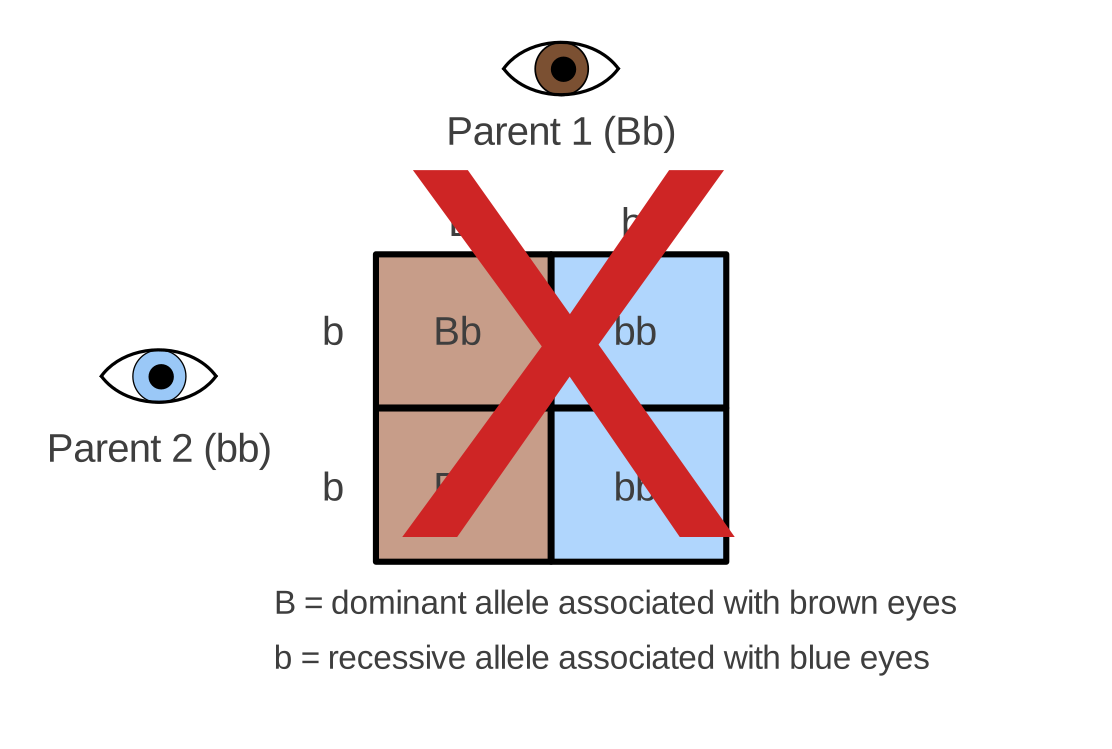
Although it is correct that a key allele involved in brown eye color is dominant over an allele related to blue eye color, scientists now know eye color is much more complex than that!
Eye color is controlled by many genes working together, especially genes like OCA2 and HERC2. The OCA2 gene is responsible for a protein that helps create and process melanin in the eye while HERC2 regulates the overall expression of OCA2.2 These genes act like dimmer switches, turning melanin production up or down rather than just on or off. Because of this, someone can look blue‑eyed but still carry hidden genetic instructions that allow more melanin to be made in their child.
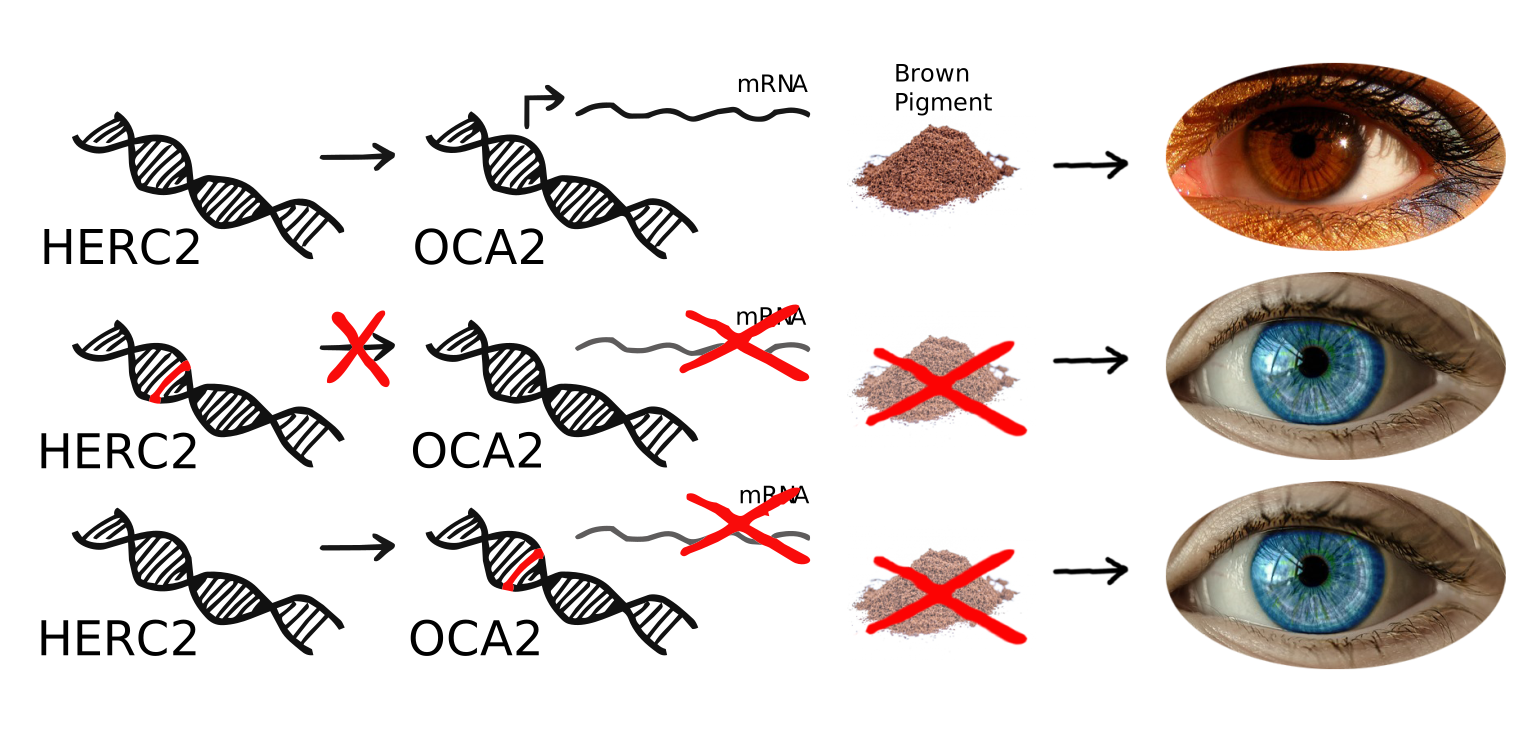
Typically, scientists have looked at a specific letter in the DNA sequence for HERC2 in order to predict whether eyes will be brown or blue. This is the allele that came up earlier. Since everyone has two copies of each gene (one copy from each parent), people can either have two A’s at this spot, one A and one G, or two G’s. Places like this where individuals can have a different letter are called single-nucleotide polymorphisms, or SNPs for short. Each SNP has a name that begins with “rs” followed by a bunch of numbers. This SNP is named rs12913832.
It had been thought that having at least one A at this SNP would cause someone to have brown eyes, while having a G at this spot in both copies of the HERC2 genes was needed for someone to have blue eyes. However, studies looking at European populations have found people with two A’s or one A and one G at this SNP who did not have brown eyes, as well as people with two G’s who did not have blue eyes!3
Recently, a team of scientists looked more closely at the HERC2 and OCA2 sequences of Norwegians who did not have brown eyes despite having at least one copy of HERC2 with an A at rs12913832. They found seven other SNPs in these individuals in both the OCA2 and HERC2 genes that may be responsible for their unexpected eye colors.3
Are some eye colors more common than others?
Eye color is largely determined by genetic variation, though ancestry plays an important role in shaping how those genetic variants are distributed across populations. Differences in eye color are primarily due to variation in the amount and distribution of melanin in the iris. Higher melanin levels are associated with brown eyes, while lower levels are associated with blue or green eyes.
From an evolutionary perspective, darker pigmentation—including brown eyes—has been associated with populations whose ancestors lived in regions with higher ultraviolet (UV) radiation, where increased melanin provides protective benefits.4 Today, this pattern is reflected in the global distribution of eye color.
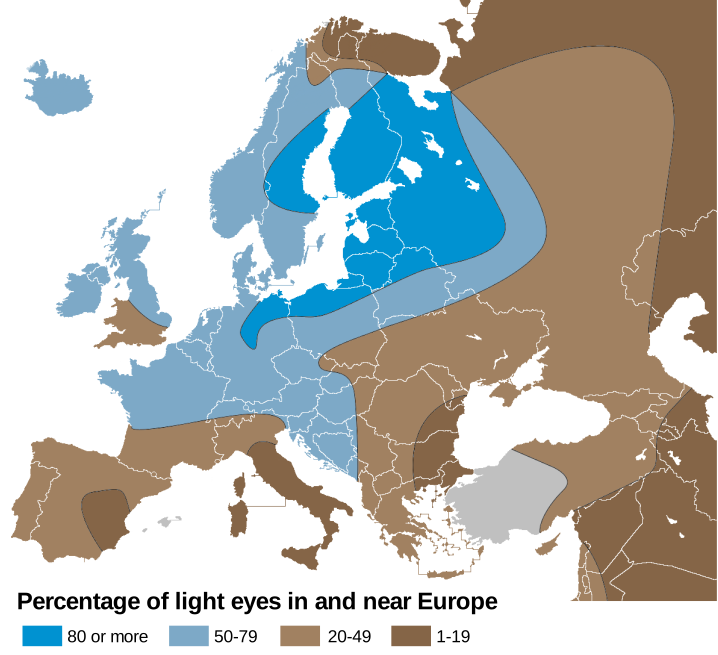
According to World Population Review, 70-80% of people worldwide have brown eyes and only 2% have green eyes - making it the rarest eye color! Blue eye color is most common in countries of Northern Europe, including Iceland, Denmark, and the Netherlands. Brown eye color is most common in Central Asia, specifically in Armenia, Azerbaijan, Georgia, Uzbekistan, Tajikistan, and Kazakhstan.5
Most children of two blue‑eyed parents will have blue eyes. But thanks to the teamwork of many genes, a brown‑eyed child is possible—just uncommon!


Author: Elsa Tippy
When this article was published in 2026, Elsa was a first year student at Stanford getting her masters in Human Genetics and Genetic Counseling. Elsa wrote this answer while participating in the Stanford at The Tech program.