 Skip Navigation


Can a half-sibling be a match for a stem cell transplant?
April 7, 2026
- Related Topics:
- Stem cells,
- Genetic testing,
- Relatedness
A college student from Argentina asks:
"I was wondering, since it is very difficult to find a stem cell donor and there are more possibilities with siblings, could a half-sibling on the father's side donate stem cells to his half-sibling?"
Hematopoietic stem cell transplants are a common treatment for many blood diseases, including leukemias, lymphomas, multiple myeloma, and sickle cell anemia.
A successful transplantation depends on the donor matching the recipient. In some cases, the donor could be the patient themself. This is called an autologous transplant. However, more commonly, the donor is a family member or an unrelated, anonymous donor. This is called an allogeneic stem cell transplant.
How close does a match have to be? Could a half-sibling be a match for a stem cell transplant? The answer is yes, a half-sibling can be a match, but we’ll get to exactly how and why this works.
What happens in a stem cell transplant?
Each blood disease has a different standard of care to achieve a specific outcome. However, the overarching goal of a stem cell transplant is to restart a patient's blood system. The bone marrow is where the blood system is produced. It houses hematopoietic stem cells, which are an important cell type that gives rise to red blood cells, immune cells (white blood cells), and platelets.
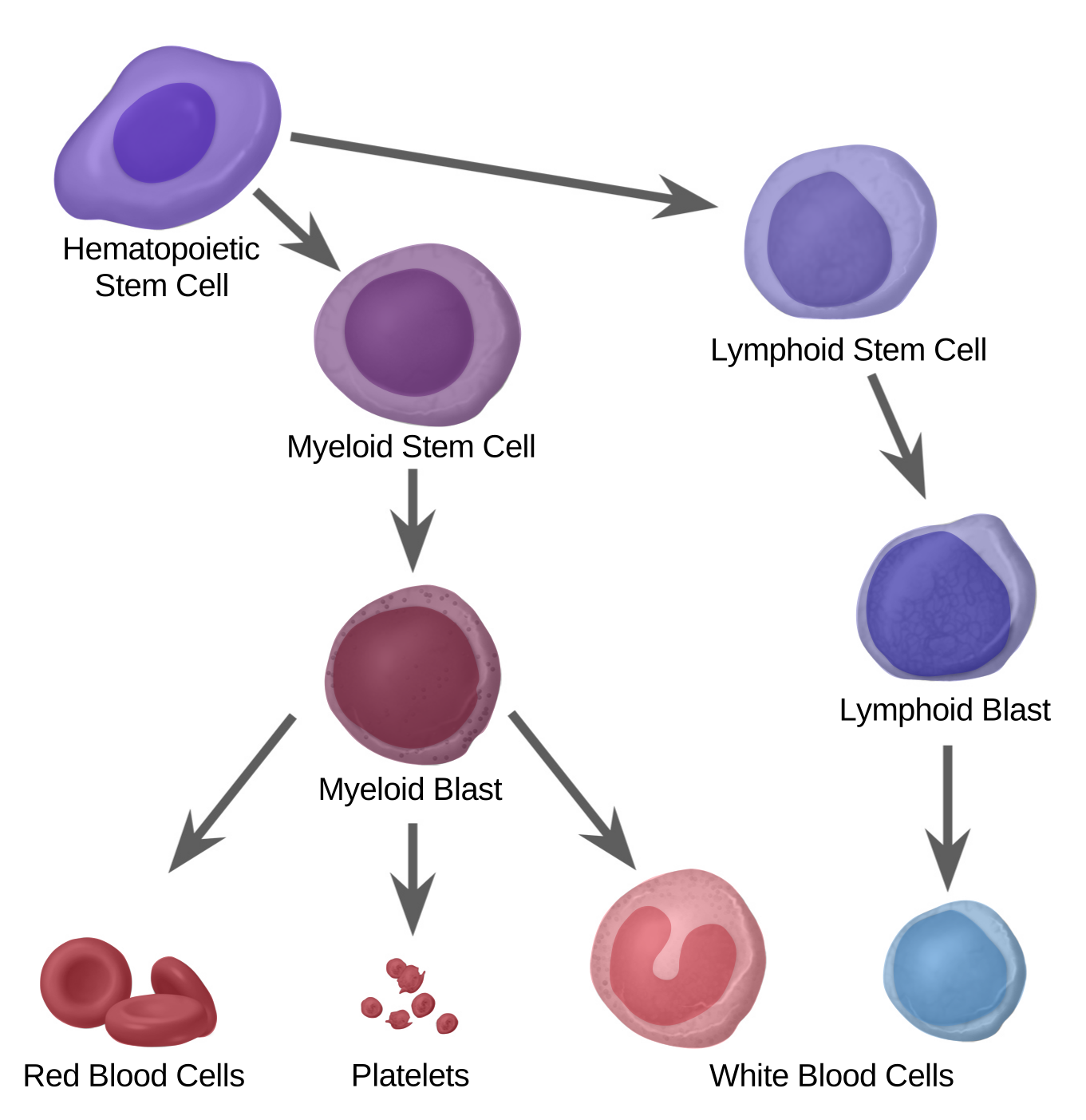
Before a stem cell transplant, the patient will receive a high dose of chemotherapy to destroy the blood cells in the bone marrow. Since the chemotherapy kills both normal and cancerous cells, the patient needs new stem cells to have a functional blood system. Healthy stem cells are collected from a donor and provided to the patient in the form of a transfusion.
In some cancer cases, the donor provides immune cells in addition to stem cells. These immune cells can attack the patient’s cancer cells. This is called the tumor-versus-graft effect since the donor cells, or the graft, directly target the tumor. Not only does this reduce the cancer in the patient, but it also helps prevent relapse.
How is a stem cell donor found?
Before a patient undergoes a stem cell transplantation, they must first take a genetic test called Human Leukocyte Antigen (HLA) typing. Once the patient’s HLA type is known, family members are contacted to find a healthy donor. This could be a parent, child, or sibling. Siblings are often contacted first because the donor should be between 18 and 35 years old to obtain the healthiest stem cells possible. If a match cannot be found, a stem cell bank is contacted. There are many stem cell banks across the world that serve different populations. The largest stem cell registry is the National Marrow Donor Program, founded in 1987. Stem cell banks keep a registry of potential donors. Transplant centers work with stem cell banks to find an appropriate donor for the patient.
Why can’t just anyone donate stem cells for a given patient?
Our immune system has the important job of destroying foreign invaders in the body, such as bacteria and viruses. To do this, it must successfully distinguish foreign substances from the body’s healthy cells. This is where HLA comes into play. HLA are proteins that are attached to the surface of nearly every single cell in the body. They’re essentially a “uniform” to signal to the immune system that they’re on the same side!
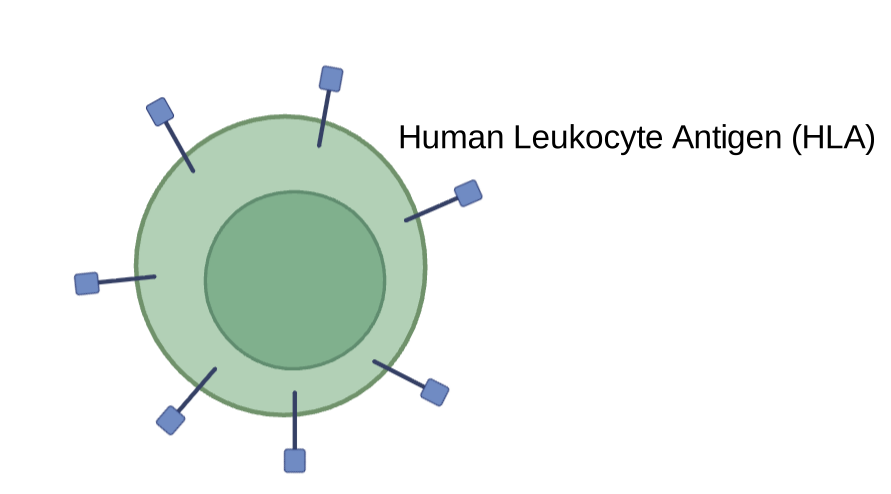
If a part of the immune system, typically a T cell, sees a cell with a different “HLA uniform,” it will destroy that cell. This is why it is important to find a close match between the donor and recipient to increase the chances of transplant success. When the match is not close, the recipient’s immune system may kill the donor cells, leading to treatment failure or graft rejection.
How closely does the HLA have to match?
We have a total of 6 HLA genes: HLA-A, HLA-B, HLA-C, HLA-DP, HLA-DR, HLA-DQ. Each person has two copies of these 6 genes, which they inherited from their mother and father. The ideal donor is HLA-identical to the patient, meaning they both have the exact same copy of each HLA. However, this is difficult to find. Moreover, research has shown that the donor doesn’t need to match at every single gene.
A major success in the stem cell transplant field is the expansion of potential donors to those who only have one matching HLA copy with the recipient. This is called a haploidentical match. Either biological parent of the patient will be haploidentical. Siblings are also likely to be haploidentical. Since the match isn’t perfect, the patient will have to take immunosuppressive drugs to prevent rejection after the transplant.
There are many avenues of research investigating which genes do or don’t matter for a transplant. One publication has shown that HLA-DR and HLA-DQ likely don’t matter much for the majority of transplant cases.1 This is why these genes sometimes aren’t taken into consideration in determining a match.
There are also non-genetic factors that contribute to transplant rejection. While I briefly mentioned that T cells are responsible for recognizing HLA, other components of the immune system also recognize HLA or contribute to rejection. Sometimes, patients develop antibodies in their blood that target the HLA type of the donor, increasing the chances of side effects. This has been observed in mothers who have gone through multiple pregnancies. During pregnancy, the mother is exposed to the foreign HLA type of the fetus and develops antibodies against the fetus’s HLAs.2
There are ongoing investigations to identify the causes of transplant rejection. As we better understand how rejection happens, we can take steps to minimize it and increase success rates.
Could a half-sibling qualify to donate?
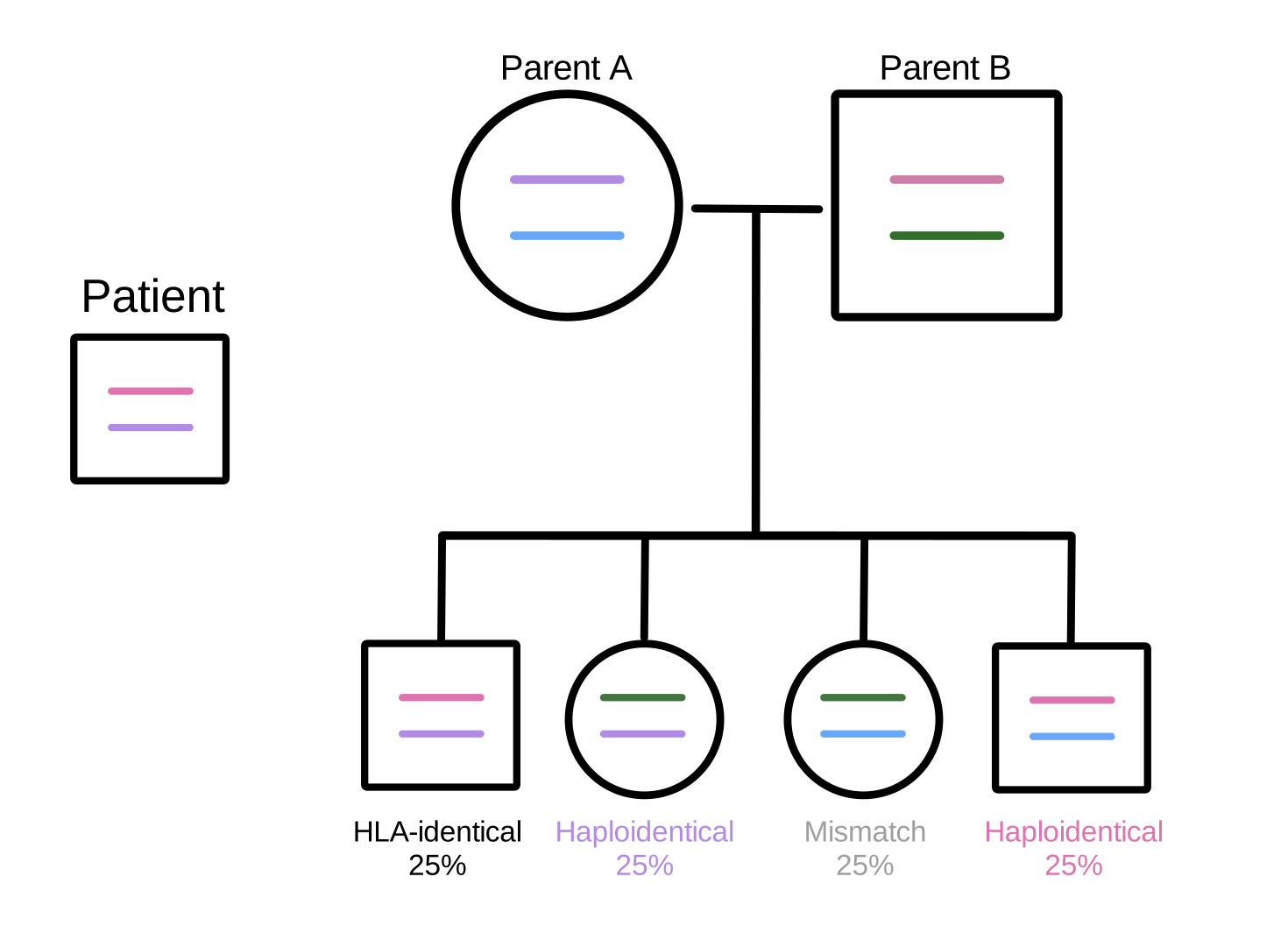
A half-sibling would never qualify as an HLA-identical match. However, a half-sibling actually has the same probability of being a haploidentical match as a full sibling. To help show you why this is the case, I’ll draw a simplified pedigree to show the pattern of inheritance for the HLA genes.
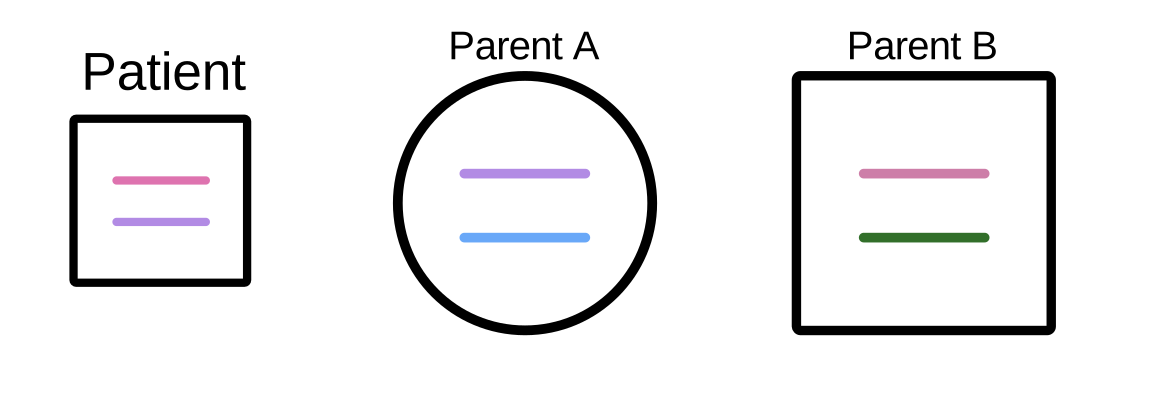
Here, we have the patient and his two parents, Parent A and Parent B. The patient inherited the purple HLA genes from Parent A. He also inherited a second set of HLA genes, the pink set, from Parent B.
If we draw out every combination of genes that the parents can contribute to each child, there are four possible combinations: purple-pink, green-purple, green-blue, and pink-blue. There is a 25% chance of inheriting any one of these combinations.
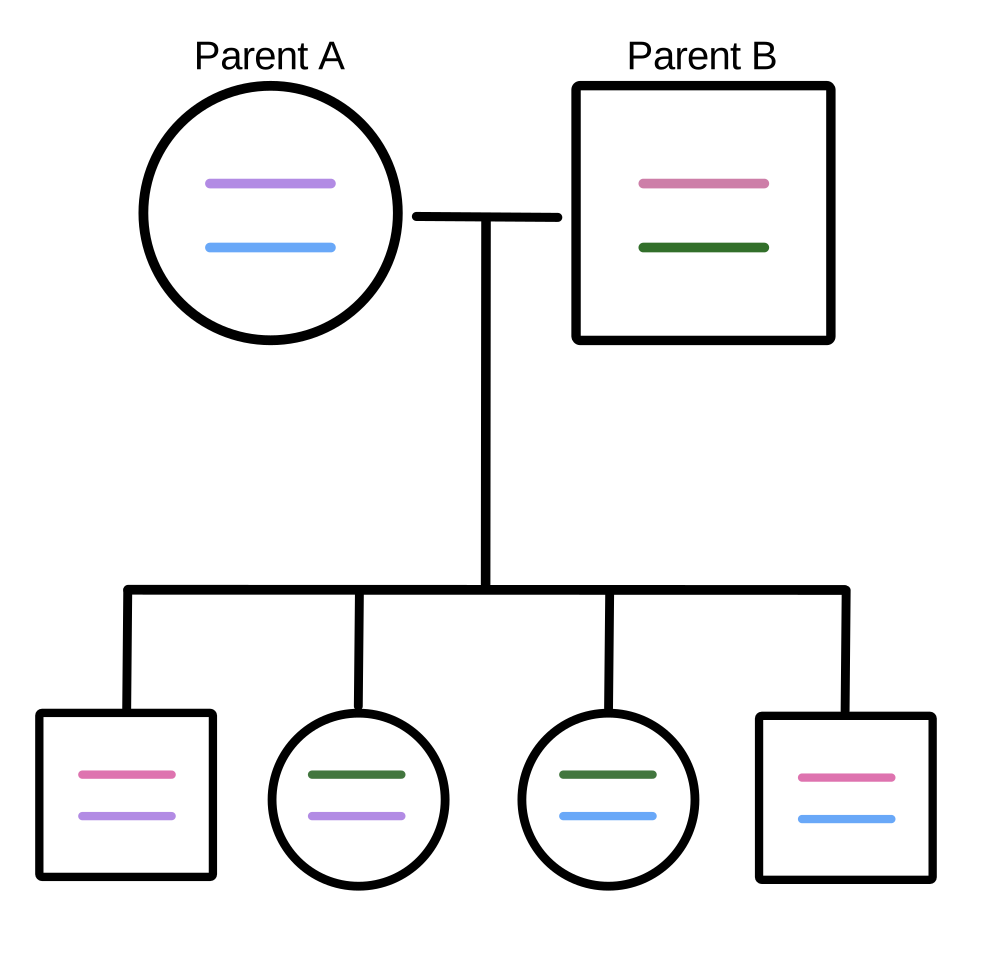
What are the odds of finding a donor match? Only the pink-purple combination perfectly matches the patient, making it HLA-identical. For a haploidentical situation, there are actually two combinations since the sibling only has to have either the pink or the purple. So, there is a 50% chance of a full sibling being haploidentical. The last combination, green-blue, doesn’t match the patient at all, so this is a mismatch.
To summarize, the odds of a full sibling being HLA-identical is 25%, haploidentical 50%, and mismatch 25%.
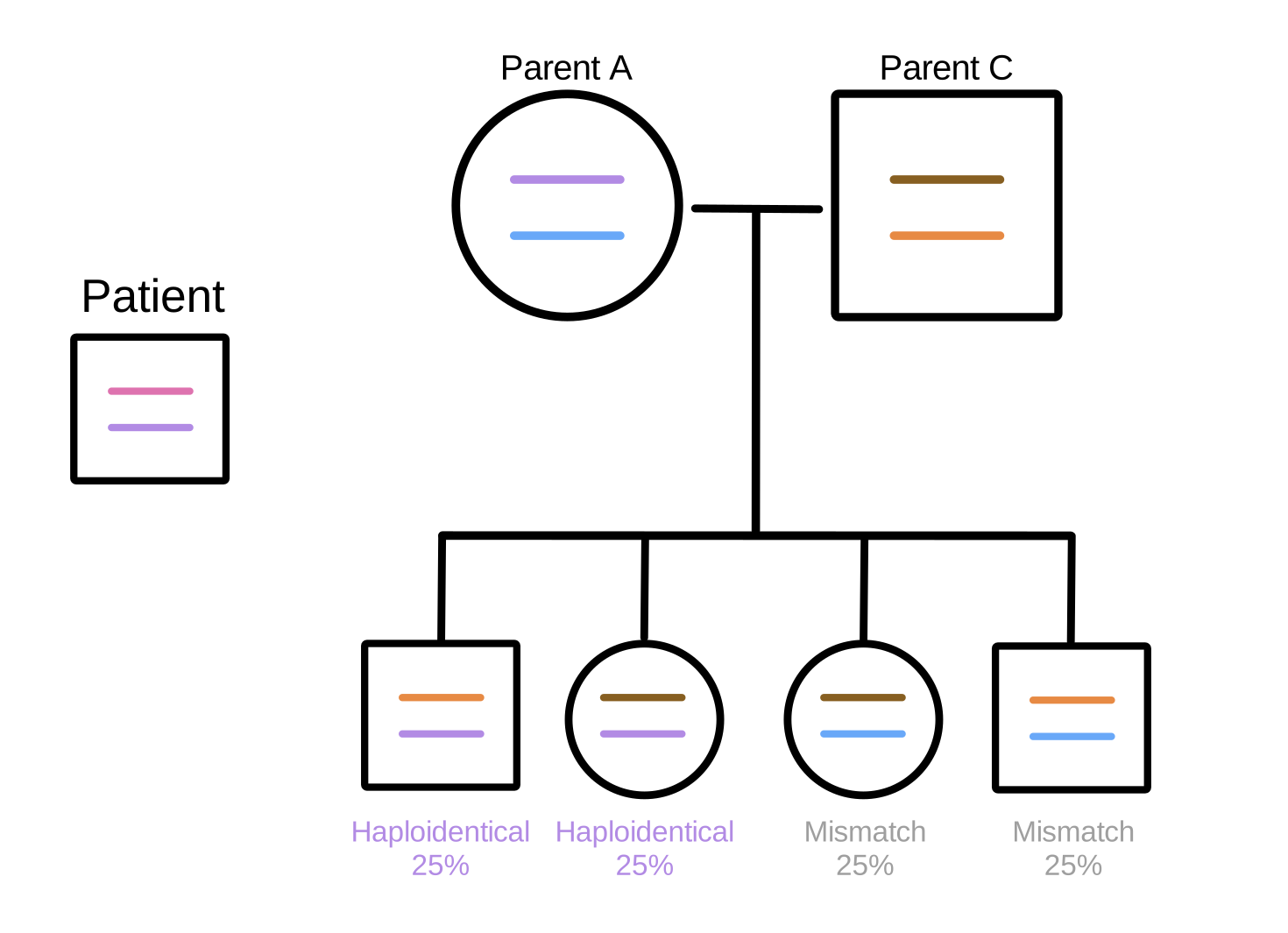
Let’s draw the same diagram for a half-sibling situation. Now, instead of Parent B, we have Parent C. Since Parent C is unrelated to the patient, there won’t be any HLA-identical matches. To be haploidentical, the half-sibling must have either the pink or the purple HLA. No half-sibling can have the pink set since the pink set came from Parent B. However, two combinations result in a half-sibling inheriting the purple set. The remaining two combinations result in mismatches.
To summarize, a half-sibling has a 50% chance of being haploidentical to the patient and a 50% chance of being a mismatch.
While a full sibling has a 25% chance of being HLA-identical to the patient, a full sibling and a half-sibling are equally likely to be haploidentical to the patient, with a 50% probability.
The future of stem cell transplantation.
Several research laboratories are thinking outside the box to solve the issues with HLA-based rejection. One approach seeks to generate stem cells in the lab and then delete the genes that encode for HLA.3 These stem cells that are missing HLA might become a one-size-fits-all therapy. Imagine the day when there will be universal stem cells that work for any patient who needs them!
The problem of stem cell availability.
Despite advances in identifying allowable HLA mismatches and creating generic stem cells, there is still an immense need for stem cell donors. Finding an appropriate match in time is rare and illustrates the importance of donor banks. Unfortunately, ethnic minority populations have historically received limited access to stem cell transplantations. One major reason for this is the lack of potential donors since people of similar ethnic backgrounds are more likely to be a match.4
If you haven’t already, please consider registering as a stem cell donor. Joining the registry could make a huge difference for someone facing a life-threatening blood cancer or disorder. For many patients, a stem cell transplant is their best chance at survival. By registering, you could be the one person who matches and gives them a second chance at life.


Author: Katie Fang
When this answer was published in 2026, Katie was a Ph.D. candidate in the Stanford Immunology Interdepartmental Program, studying a tumor reprogramming cancer vaccination approach in Ravindra Majeti’s laboratory. Katie wrote this answer while participating in the Stanford at The Tech program.