 Skip Navigation


How do different genes contribute to our traits like eye and skin color?
February 25, 2026
- Related Topics:
- Appearance,
- Eye color,
- Pigmentation traits,
- Gene expression
A high school student from New Zealand asks:
"Does all of our genes get used for protein synthesis? Like for example if I have a copy of a gene for brown eyes and a copy for a gene that makes blue eyes, they both make proteins but the brown eyed proteins wins out, but I make less brown eyed proteins than another person with 2 brown eyed genes. Is this also why mixed people often have lighter complexions compared to their more dominant gene parent? Because they don't produce the same amount of proteins because they have that other gene?"
Surprisingly, there is no such thing as a blue eye protein! More on that later.
Different genes can “compete” against each other in determining our physical characteristics like eye color, skin color, and height. However, it gets a little complicated because in many cases, these physical characteristics depend on interactions between many different genes and different forms of these genes.
First, let’s dig into some of the basics.
Genes – the instruction manual for our traits
Things like eye and skin color are examples of traits. Traits are observable characteristics that are determined by both our genes and environmental factors.
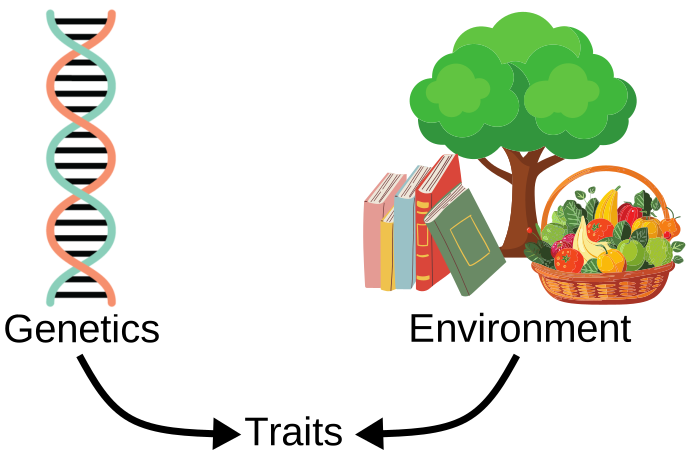
Genes are long sequences of DNA that our cells use as instructions to make different kinds of proteins. If DNA was a book of recipes, each gene would be a single recipe, with each recipe making a different kind of protein.
Unlike the types of books we are used to reading, DNA is made up of nucleotides that come in 4 different forms. These different combinations of four nucleotides serve as sequences that actually code for proteins. To make these sequences easy to read, scientists represent these 4 different kinds of nucleotides with the letters A, T, G, and C.
Everyone has two copies of each gene, one inherited from each parent. If we all had the exact same sequence for all of our genes, we would all look the same! Our differences come from the fact that genes come in many different versions, which geneticists call alleles.
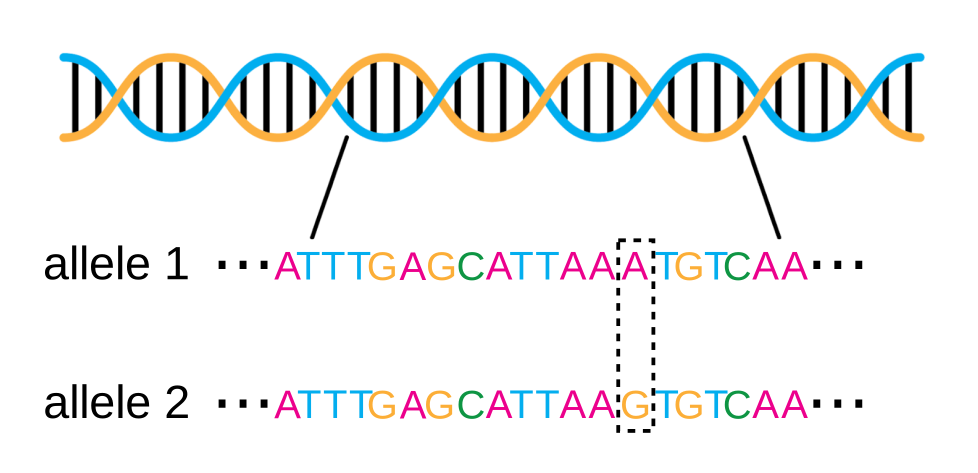
A common misconception is that traits are determined by a single gene. In reality, biology is a lot more complicated. While some human traits have been found to be largely determined by a single gene, most traits, including eye and skin color, are quite complex and are determined by the effects of multiple genes. We call these traits polygenic, meaning that they involve more than one gene.
How is eye color in humans determined?
With so many different variations in eye colors out there, does this mean that there’s a gene for each different color? Not quite. The eye is actually only capable of producing one pigment called melanin which comes in two forms – eumelanin (which is brownish-black) and pheomelanin (which is reddish-yellow).
What we perceive as differences in eye color are actually differences in the amount of each type of melanin present in the iris (the colored part of the eye surrounding the pupil) and how they are distributed.
Just like when you mix two colors of paints together, the final color depends on how much of each starting color you had. When there’s more eumelanin in the eye, the eye color tends to be dark and brown. Having less eumelanin and more pheomelanin causes the eyes to take on more green, amber, and hazel hues.
So how do we get blue eyes?
Blue eyes are what you get when there is very little to no melanin in the eye. When this happens, light that enters the iris gets reflected back rather than being absorbed by any dark melanin pigments (think about how a black piece of paper in the sun absorbs all the wavelengths of light and heats up quickly). Blue light happens to be reflected back particularly well, which is why blue eyes will appear blue.

Have you ever wondered why the sky appears blue? As sunlight passes through the sky, it hits particles in the air, causing different wavelengths of light to scatter in all directions. The blue wavelengths get reflected farther than other colors, causing us to see the sky as blue. This is similar to what happens with blue eyes, but at a much larger scale!
How is melanin made?
One thing to be aware of is that melanin is not actually a protein, meaning that it doesn’t get directly made by genes.
Rather, melanin is made by cells through a series of different steps, like cooking a recipe. Each step requires different proteins made by different genes. Ultimately, this means that there are many different genes that each play some role in determining the final amount of melanin that gets made in the iris.
Scientists are aware of two genes, OCA2 and HERC2, which happen to play larger roles in determining eye color.1,2
OCA2 is a gene that makes a protein that’s important for the very first step in the recipe for melanin. You can imagine that if this gene doesn’t work properly, then all the following steps won’t work and no melanin can be made. If someone has two alleles of OCA2 that don’t function properly, then they will probably have blue eyes. If someone has one functional and one non-functional allele of OCA2, they are more likely to have brown eyes because just one copy of the gene is enough to get the melanin recipe going. When the effect of one allele is stronger than the effect of another allele, like in this case, we call this concept dominance.
However, it gets a little complicated. Some genes can act like a switch that determines whether other genes are turned on or not. HERC2 is a gene located near OCA2, and certain HERC2 alleles can turn OCA2 off, giving someone blue eyes even if someone has the dominant version of OCA2 that would normally make brown eyes.
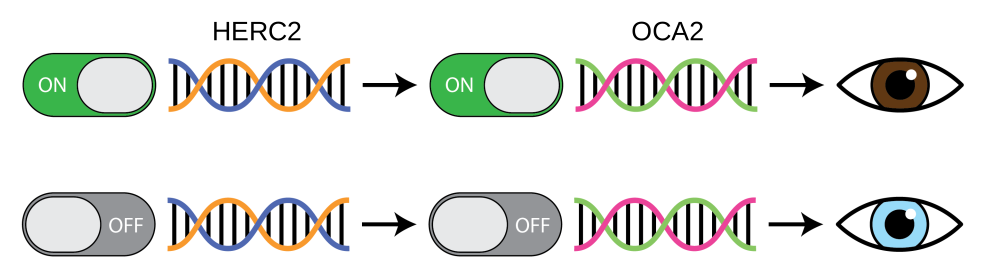
One study identified a specific mutation in the HERC2 gene (a single letter change from an A to a G!) that was present in 97% of blue-eyed people tested.3
Despite all we know now, it’s still difficult to precisely predict a child’s eye color from the eye color of the parents. There are many genes aside from OCA2 and HERC2 that also determine eye color, and there may be other alleles for these genes which genetic testing services might not know to check for.
A common misconception is that two parents with blue eyes can’t have a child with brown eyes since brown eyes are “dominant” to blue eyes. It’s relatively unlikely, but it’s certainly possible, depending on the exact combinations of alleles that the child receives from their parents for all the eye color genes.
What about skin color?
Just like eye color, skin color is a polygenic trait. In fact, one recent study conducted at Stanford found 169 genes involved in human skin pigmentation!4 Since skin cells also produce melanin, genes like OCA2 are also involved in determining skin color.
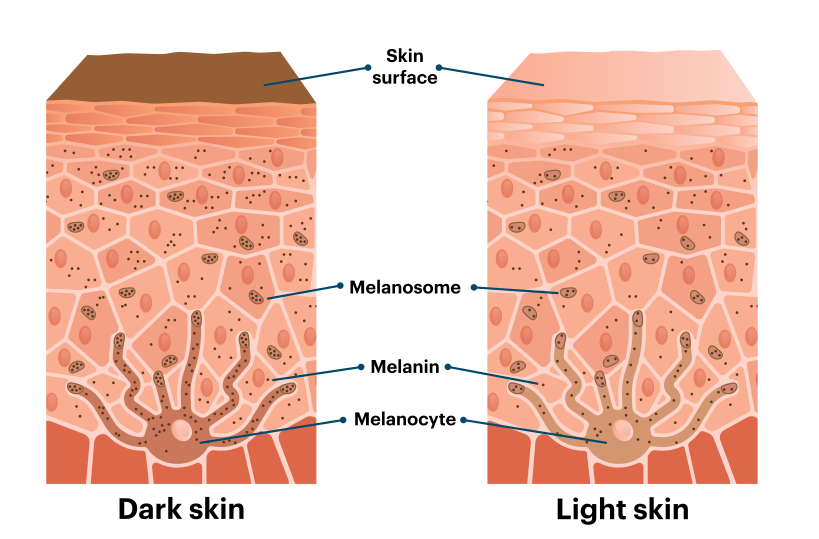
By studying how all of our different genes interact with each other, we can not only get a better picture of how our traits are determined, but also understand how these interactions can lead to disease.
Because of the intricate interplay between genetics and environmental factors, each one of us is truly unique. At the same time, on average, 99.9% of our DNA is the same.5 The remaining 0.1% contributes to the differences we can see, so we have much more in common with each other than you might think, which is a nice, heartwarming thought!


Author: Austin Huang
When this answer was published in 2026, Austin was a Ph.D. candidate in the Institute for Stem Cell Biology and Regenerative Medicine, studying inner ear sensory cell regeneration in chickens in Stefan Heller’s laboratory. Austin wrote this answer while participating in the Stanford at The Tech program.