 Skip Navigation


Can RNA be chemically modified?
February 11, 2026
- Related Topics:
- RNA,
- Gene expression,
- Epigenetics,
- Molecular biology
A curious adult from Washington asks:
"I’ve heard that DNA can be chemically modified through epigenetics. Can RNA be modified in a similar way?"
If you thought DNA was the only molecule in your cells that gets those little chemical “decorations” which scientists call epigenetic marks – well, think again! Turns out RNA gets in on the action as well! Many RNA molecules in our cells get modified in ways similar to DNA, which can impact how genes are expressed.
While DNA acts like the long-term instruction manual of the cell, RNA is the working copy that actually carries out those instructions. Adding chemical modifications to RNA is a way for cells to fine-tune which messages get used, how long they last, and how efficiently they are turned into proteins. In other words, RNA modifications give cells a flexible toolkit to control their genes on the fly – without rewriting the underlying DNA.
But let’s take a step back. What exactly is epigenetics in the first place?
Chemical Marks Changing the Genetic Message
Imagine copying a recipe onto a sticky note – and then adding highlights, arrows, and reminders before you start cooking. That’s the basic idea behind epigenetics, which refers to chemical changes added on to DNA (or the proteins wrapped around it) that control how genes are expressed without changing the DNA sequence itself. These chemical “tags” can turn genes up or down, often in response to signals from the environment.
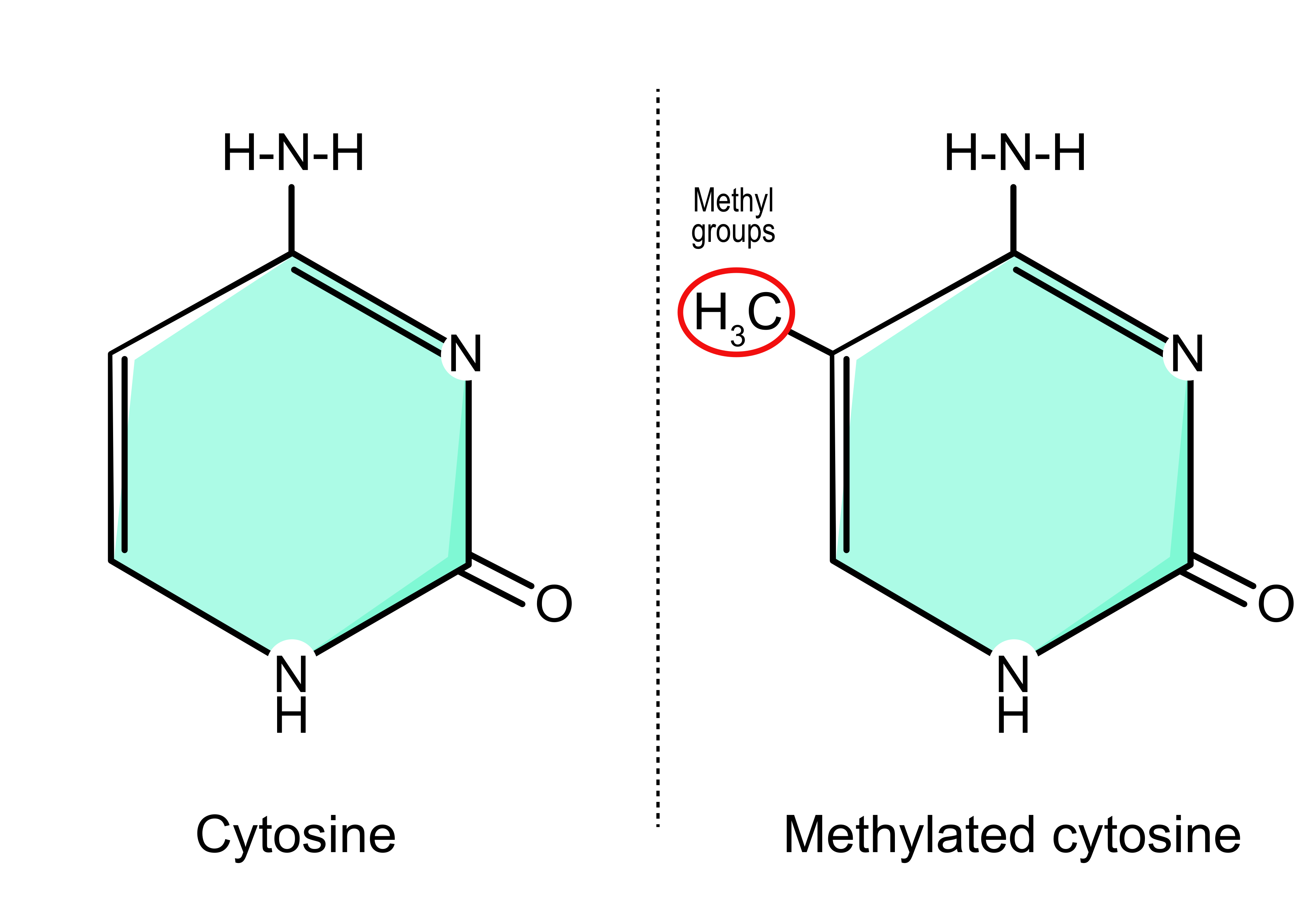
One of the most well-known examples is DNA methylation, in which a tiny chemical group called a methyl group is attached onto a DNA base. This can silence a gene or change how actively it is read. Think of it like marking certain pages of your recipe book so they’re harder to find. Epigenetic marks like these are critical for a whole range of cellular functions, including making sure that cell types turn on the right genes and keep others turned off. This is part of what prevents your muscle cells from acting like heart cells and vice versa!
Chemical Sticky Notes on RNA
Similar to DNA, as RNA molecules are made, cells can add small chemical changes to specific RNA letters, which scientists refer to as RNA modifications. And just like in DNA, these modifications don’t change the sequence of the RNA, but can change how that RNA behaves – how stable it is, how it folds, and how it does its job.
These modifications, collectively termed the epitranscriptome, are anything but accidents – rather, cells have specialized proteins that add them (“writers”), remove them (“erasers”), and recognize them (“readers”). The activity of these proteins must be tightly regulated, because cells need to prevent them from acting at the wrong time or place which could completely rewrite the genetic message carried by RNA.
Let’s take a look at two well-studied RNA modifications to get a better sense of what these chemical marks actually are.
m6A and the Many Fates of mRNA
One of the most abundant RNA modifications is called m6A, short for N6-methyladenosine. This modification consists of a methyl group attached to one of RNA’s bases called adenosine. m6A shows up in many types of RNA, but is especially prevalent in messenger RNA (mRNA), the type of RNA that carries instructions from DNA to the protein-making machinery.
m6A is added by a group of proteins that work together as a molecular tagging team. These proteins recognize specific RNA sequences and place the modification at particular spots. Other proteins can remove the tag and still others can bind to m6A-marked RNA and change how it is handled by the cell.
Inside the cell, m6A can impact the fate of an mRNA in many different ways depending on which reader recognizes the modification. Some readers stabilize messages and help them get translated into proteins while others do the opposite. For example, one reader called YTHDF1 boosts the stability of m6A-containing mRNAs and promotes their translation into proteins.1 In contrast, recognition of m6A-marked mRNAs by a different reader protein called YTHDF2 leads to recruitment of the cell’s RNA-degradation machinery.2 When that happens, the mRNA is broken down and the message it carries is effectively erased.
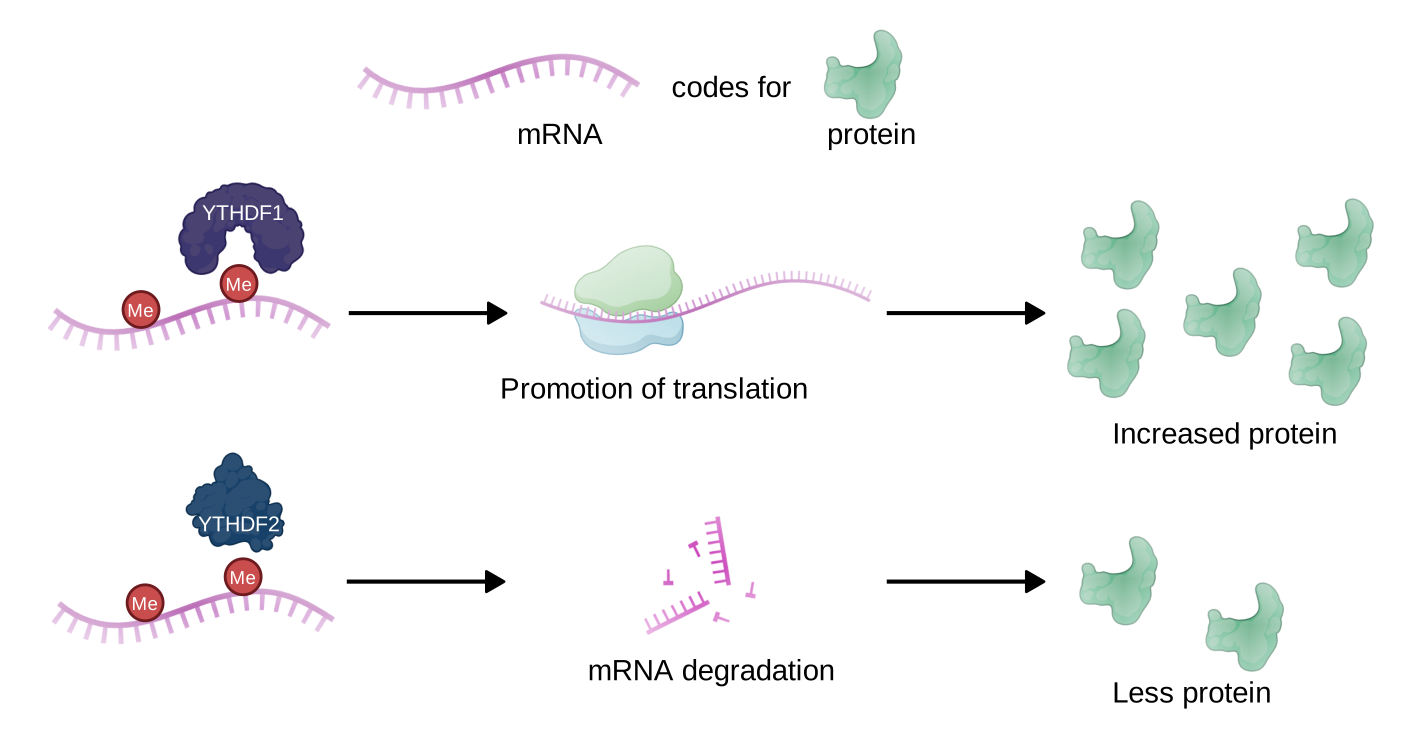
Because of how dynamic m6A modifications are, cells can quickly adjust protein production in response to external cues by simply changing m6A patterns on existing RNA, without needing to go all the way back to the DNA. It’s a fast, flexible layer of control.
Pseudouridine: A Modification with Many Jobs
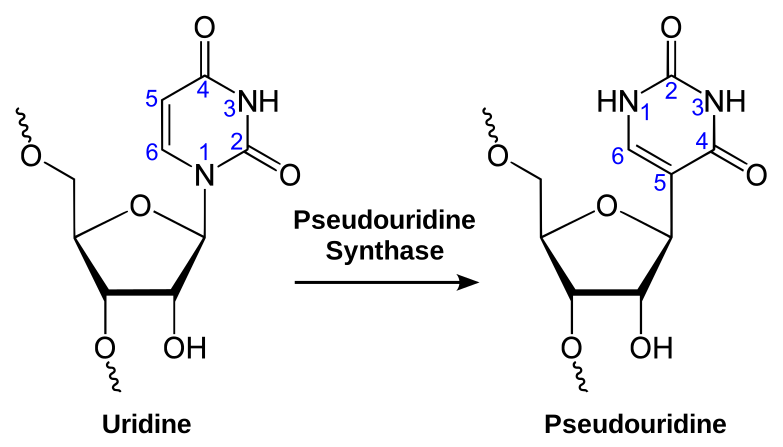
Another important RNA modification is called pseudouridine, often written as Ψ. Pseudouridine is a modified version of one of RNA’s standard bases, uridine. Instead of adding a new chemical group, the cell just rearranges the way in which the atoms of the base are connected in a process called isomerization. In other words, the RNA sequence stays the same, but the chemistry and behavior of that letter changes.
Pseudouridine is installed by specialized proteins called pseudouridine synthases. While the factors guiding the specificity of these proteins for particular locations are still not fully understood, some of these writers are known to recognize RNA sequence or structural features.3,4 And unlike m6A, pseudouridine is not usually removed once it’s added, making it a relatively stable mark.5
This modification is especially common in transfer RNA (tRNA) and ribosomal RNA (rRNA), the RNAs that form the core of the protein-making machinery. Here, pseudouridines are crucial for helping RNA fold into its correct shape so that it can perform its function properly in protein synthesis.6 But pseudouridines have also recently been found in mRNAs, which has led many scientists to wonder what they might be doing there.
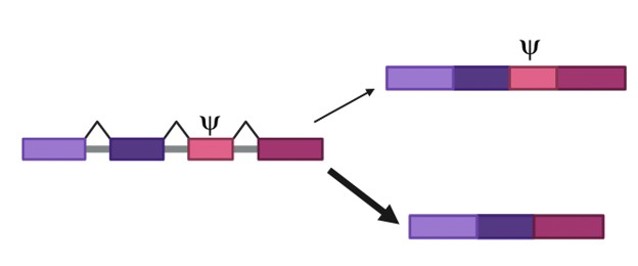
Although we still don’t have the complete picture, studies suggest that one role of mRNA pseudouridines might be related to splicing. Splicing refers to the process that edits newly made RNA messages, cutting out unneeded sections and stitching the remaining pieces together. Pseudouridines can change how this editing happens by influencing which pieces of an RNA message are kept and which are removed.7 In doing so, they can change the type of protein that gets made from that RNA!
Harnessing the Power of RNA Modifications
RNA modifications aren’t just something that cells use for their own purposes – they’ve also now become powerful tools in modern medicine. A great example is the mRNA COVID-19 vaccine. These vaccines work by delivering a piece of mRNA that tells our cells how to make a harmless fragment of the virus, which then trains the immune system to recognize the real thing.
Early attempts to use mRNA as a therapeutic ran into a major problem. Unmodified mRNA can trigger strong immune responses that cause it to be destroyed before it has the chance to do its job. But this is where pseudouridine came to the rescue.
By replacing some of the usual uridines in the vaccine mRNA with pseudouridine, scientists surprisingly found that the mRNA no longer caused an immune response! Somehow, pseudouridines seemed to cloak the mRNA from cellular sensors that would typically raise immune alarms upon detecting foreign mRNA.8 This modified mRNA sticks around long enough to be translated efficiently into proteins, enabling it to be used as a vaccine. In other words, a naturally occurring RNA modification – one our cells use every day – gave us one of our biggest tools in the fight against the COVID-19 pandemic.
This is just the beginning. Researchers are now exploring how RNA modifications can be used to improve mRNA-based therapies for a range of diseases, including cancer and rare genetic disorders. By learning how cells normally write, erase, and read these chemical marks, scientists are finding new ways to rewrite the messages of life at the RNA level.


Author: Ronit Jain
When this article was published in 2026, Ronit was a graduate student in the Genetics Department at Stanford studying RNA-mediated gene regulatory processes. Ronit wrote this answer while participating in the Stanford at The Tech program.