 Skip Navigation


Celebrating Black History Month 2026
February 1, 2026
- Related Topics:
- Tech Partners,
- In the Community,
- STEM,
- Black History Month,
- Historical Figures
Black History Month is a time to honor the achievements, contributions, and resilience of Black individuals throughout history. Highlighting STEAM leaders during this month underscores the vital role Black innovators have played—and continue to play—in science, technology, engineering, arts, and mathematics. The Tech Interactive celebrates creativity alongside technical skill, reflecting the full scope of innovation and problem-solving. We’re celebrating the following four innovators this Black History Month.

Calcea Johnson
Calcea Johnson is an American mathematician known for groundbreaking work on the Pythagorean theorem alongside her high school classmate, Ne'Kiya Jackson. She co-discovered a novel proof of the theorem, challenging a long-held assumption that such proofs were impossible. The work gained international attention and was later expanded into multiple proofs.
Johnson’s achievement led to publication in a peer-reviewed mathematics journal and widespread recognition for advancing mathematical understanding at a remarkably young age. Her work has inspired renewed interest in classical geometry, highlighted the creative potential of young scholars, and contributed to greater visibility for underrepresented groups in mathematics.
Johnson is currently studying environmental engineering at Louisiana State University (LSU), and aims to apply her degree toward sustainability and clean energy work that benefits communities and the planet. She’s passionate about uplifting communities in need and advancing renewable energy solutions, combining her STEM skills with a commitment to environmental and social impact.
Did you know?
Builders and architects use the Pythagorean theorem (specifically the 3-4-5 rule, a special right triangle) to ensure that corners are precisely 90-degree right angles, which is essential for a building's stability and correct alignment.

Ne'Kiya Jackson
Ne’Kiya Jackson is an American mathematician known for groundbreaking work on the Pythagorean theorem alongside her high school classmate, Calcea Johnson. Rather than relying on the Pythagorean theorem itself, Jackson and Johnson used trigonometric concepts like sine and cosine to develop their proof. After presenting the work at a high school math contest and later at the American Mathematical Society’s annual conference, this achievement drew widespread acclaim and national attention.
Jackson expressed hope that her work would encourage more young people to explore STEM, emphasizing that age should never be seen as a limitation. She stressed that nothing is impossible and that anyone can achieve great things with determination and confidence.
Jackson is a college student at Xavier University of Louisiana, where she is pursuing a doctor of pharmacy (Pharm.D.) degree. She plans to make a positive impact on the community by working to help others through healthcare, seeing her mathematical achievement as just one chapter in a broader professional journey.
Did you know?
Engineers apply the Law of Sines and the Law of Cosines to calculate forces and stresses in non-right-angled triangular supports within complex structures.
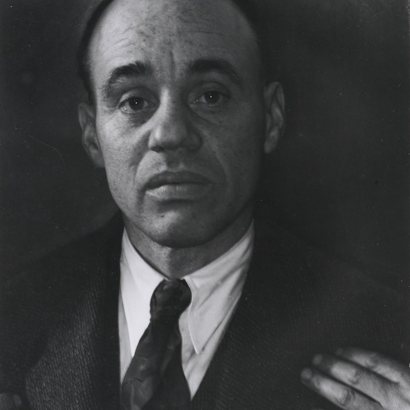
Sargent Claude Johnson
Sargent Johnson was a pioneering African American sculptor who became the first Black artist on the West Coast to gain national recognition. He built his career in the Bay Area after moving to San Francisco in 1915.
Johnson studied painting and drawing and eventually attended the California School of Fine Arts (now the San Francisco Art Institute) studying under famous sculptors. He was strongly influenced by African carvings, and during the 1930s while creating New Deal public art, he broadened his practice to include abstraction and elements of Mexican muralism. Johnson helped shape the development of modern art in California.
Johnson contributed to civil rights by using modern art to challenge racist stereotypes and promote dignified, humanizing representations of African Americans. Through sculpture and public art, he asserted racial pride and visibility, helping advance cultural recognition and social equality during a period of widespread discrimination.
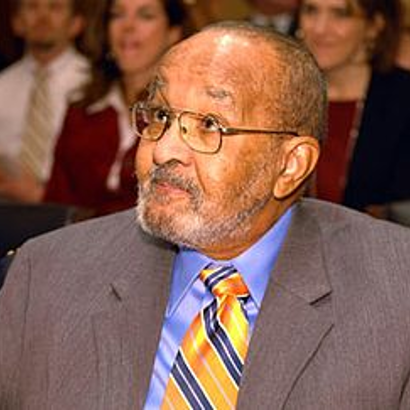
Emmett W. Chappelle
Emmett W. Chappelle was a pioneering biochemist whose research revealed how specific chemical reactions cause living organisms to emit light. His work harnessed bioluminescence to advance major discoveries in biology and chemistry, creating powerful tools for detecting life at the cellular level.
Born in Phoenix, Arizona, Chappelle earned a master’s degree in biology from the University of Washington. In 1963, while working at NASA, he investigated the properties of light produced by living organisms. As part of the Viking Mars probe team, he helped develop instruments to analyze Martian soil and realized that certain chemicals emitted measurable light when combined with materials containing living cells. He later applied this discovery to detect bacteria in urine, blood, spinal fluid, drinking water, and food, greatly improving diagnostic and safety testing.
Chappelle also helped develop laser-induced fluorescence to identify plant stress, enabling scientists and farmers to assess crop health and productivity. This technology improved agricultural practices worldwide. Beyond his scientific achievements, Chappelle was deeply committed to mentoring and supporting minority students in STEM, leaving a lasting educational legacy.
Come see if you can catch one of our rotating pop up activities on the lower level creating artwork of a bioluminescent sea creature!
At The Tech Interactive, we are proud to recognize and celebrate the achievements of STEAM leaders. This Black History Month, help inspire future problem solvers by taking action:
- Commit to being an active ally for racial justice
- Explore books by Black authors
- Watch films and documentaries on Black history
- Learn about influential Black artists and creators
- Support Black-owned businesses
- Donate to Black-led organizations