 Skip Navigation


Can there be alligator-crocodile hybrids?
December 10, 2025
- Related Topics:
- Animal biology,
- Evolution,
- Speciation
A curious adult from California asks:
"Can there be alligator-crocodile hybrids?"
Alligators and crocodiles are often confused for one another. Although they look similar, they’re actually quite different. In fact, they are so different that it would be impossible for them to breed and create alligator-crocodile hybrids!
What are animal hybrids, and how do they happen?
If two animals from different lineages crossbreed, they can create an animal hybrid! One famous example is the liger (lion + tiger). Ligers aren’t usually found in the wild, though, because lions and tigers live in very different habitats.
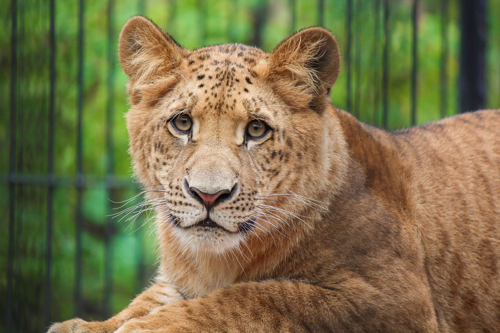
Hybrids can occur in nature if animals live in the same area and breed at the same time of year. Scientists are constantly discovering new hybrid species, like the narluga (narwhal + beluga whale). The first evidence of a narluga was found in Greenland in 1990, but it wasn’t until 2019 that scientists could analyze the narluga’s genes to prove that it was a true hybrid.1
For hybrids to happen, the animals must be genetically compatible enough to create offspring. Animals that are more closely related to each other tend to be more compatible.2 Usually, this means that the parents’ species are part of the same genus, or at least in the same family. Scientists use these groupings to describe how closely related two animals are, based on their most recent common ancestor.
The scientific name of an animal has two parts: its genus and its species. For example, lions (Panthera leo) and tigers (Panthera tigris) are both in the genus Panthera, which contains all of the species of big cats that are living today. Narwhals (Monodon monoceros) and beluga whales (Delphinapterus leucas) are in different genuses, but they are both in the family Monodontidae.
Can there be alligator-crocodile hybrids?
Alligators and crocodiles might look similar at first glance, but they do have some physical differences. Alligators tend to have a wider, U-shaped snout, while crocodiles have a narrow, triangular snout. Crocodiles also have a distinctive ‘toothy grin’ and tend to be a lighter shade than alligators.
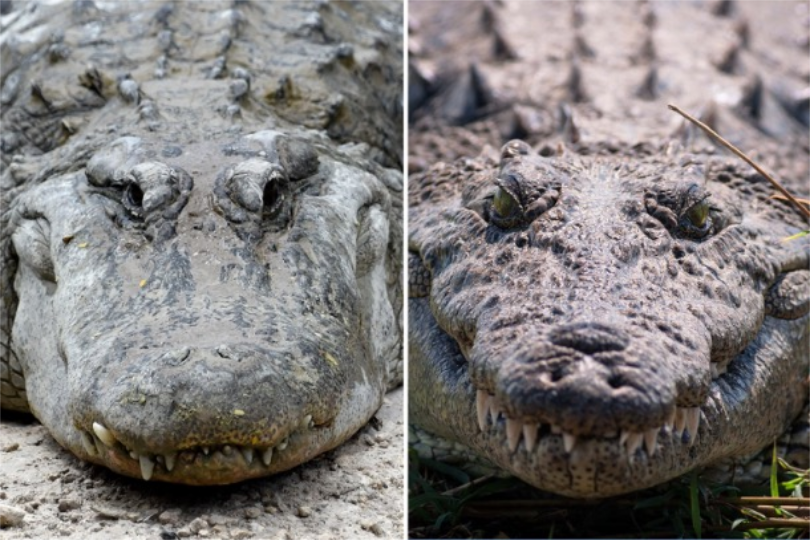
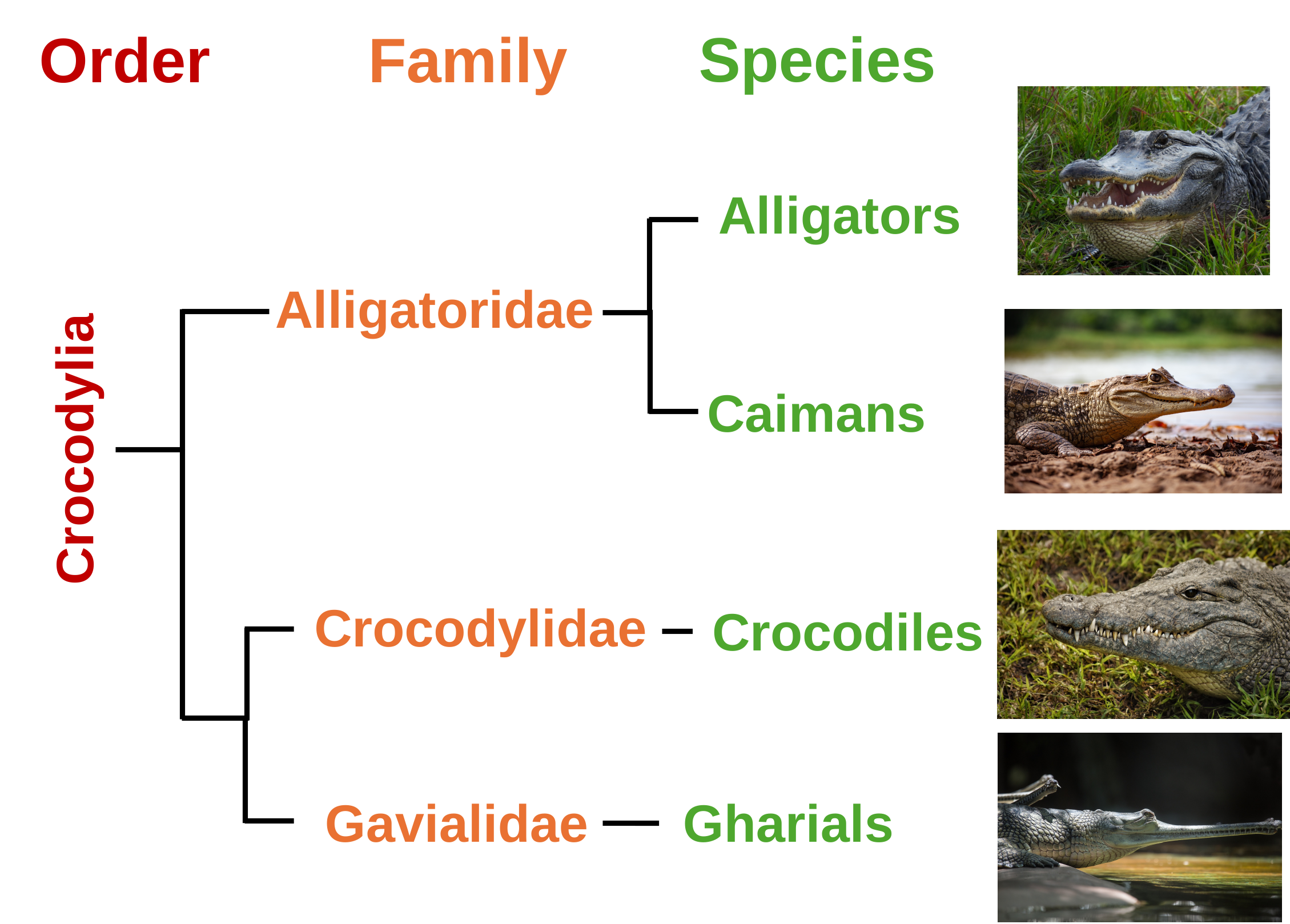
Genetically, crocodiles and alligators are quite distinct. Crocodiles are part of the family Crocodylidae, while alligators are part of the family Alligatoridae. These families diverged 80 to 100 million years ago.3,4 For comparison, cats and dogs only diverged 40 to 50 million years ago. So crocodiles and alligators are much more different from each other than they might look!
It’s rare for species from two different families to crossbreed, and even rarer for the hybrids to be healthy. For example, guinea fowls (Numida meleagris) and chickens (Gallus gallus) can mate, but their hybrid offspring are usually unhealthy and sterile.5 Guinea fowls and chickens are from two families (Numididae and Phasianidae) that diverged approximately 47 million years ago, at least 33 million years after crocodiles and alligators.
Crocodiles and alligators also tend to prefer different habitats. Alligators live in freshwater, while crocodiles mostly live in saltwater or brackish water (saltier than freshwater, but less salty than saltwater). In fact, there’s only one place in the United States where you can find both crocodiles and alligators in the wild: Florida! However, even in Florida, you probably won’t find a crocogator prowling around. Crocodiles and alligators are simply too different.
Animal hybrids and climate change
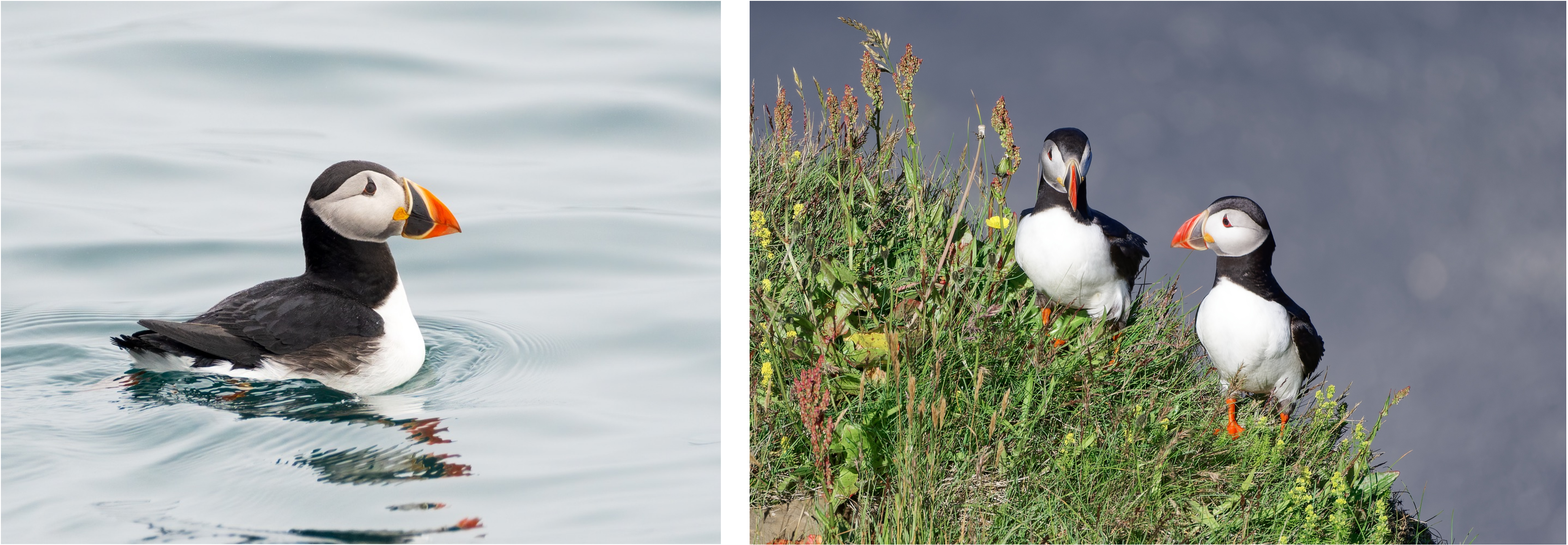
Animal hybrids aren’t just interesting creatures with funny names – they may also be a response to climate change!6 Scientists think that Atlantic puffins may have responded to climate change in the Arctic by migrating and crossbreeding in the last 100 years.7 By analyzing their DNA with modern tools, researchers mapped out the genetic diversity of the puffins starting from 500,000 years ago.
A recent study on 5 species of rainbowfish in Australia found that crossbreeding actually helped these fish adapt to climate change.6 The fish hybrids had more genes that would let them live comfortably in warmer water.
We’re learning more about animal hybrids every day. How do they interact with their parent species? What conditions make hybrids more likely to happen? How are hybrids more or less suited to their environment than their parents? These are just a few of the many questions about hybrids that scientists are working to answer today.

Read More:
- Ligers, zorses, and pizzlies: How animal hybrids happen - National Geographic
- Lions are big. Tigers are bigger. Lion-tiger hybrids are biggest. Why? - The Tech Interactive
- Hybridization, and How it Affects Biodiversity – Frontiers for Young Minds
- Crocodiles and Alligators Facts and Information – Seaworld
- Unravelling the Surprisingly Complex History of Crocodiles - Natural History Museum, UK

Author: Abena Peasah
When this answer was published in 2025, Abena was a Ph.D. candidate in the Department of Bioengineering, studying the effects of bone and immune cells on osteosarcoma drug response and signaling in Dr. Fan Yang’s laboratory. Abena wrote this answer while participating in the Stanford at the Tech program.