 Skip Navigation


Why are cows so many colors?
May 20, 2026
- Related Topics:
- Animal biology,
- Hair color,
- Evolution,
- Pigmentation traits
A curious adult from California asks:
"Why do cows come in so many different colors? Does this have to do with different habitats around the world?"
In short, cow color variation is caused by mutations in genes that control coat color. Why so many cow coat colors survived is mostly due to domestication, as the evolutionary pressures that influenced cows came mostly from humans rather than a need to escape predators or survive in harsh environments. However, some coat colors do still provide advantages in different environments.
What actually controls a cow’s coat color?
Coat color is controlled by a combination of over 150 genes. Some of these genes are important in the development of melanocytes, which are cells that produce pigments called melanins.1 Cow coat color is also influenced by genes involved in melanin pigment production and transport. These pigments also control skin, hair, and eye color in humans!
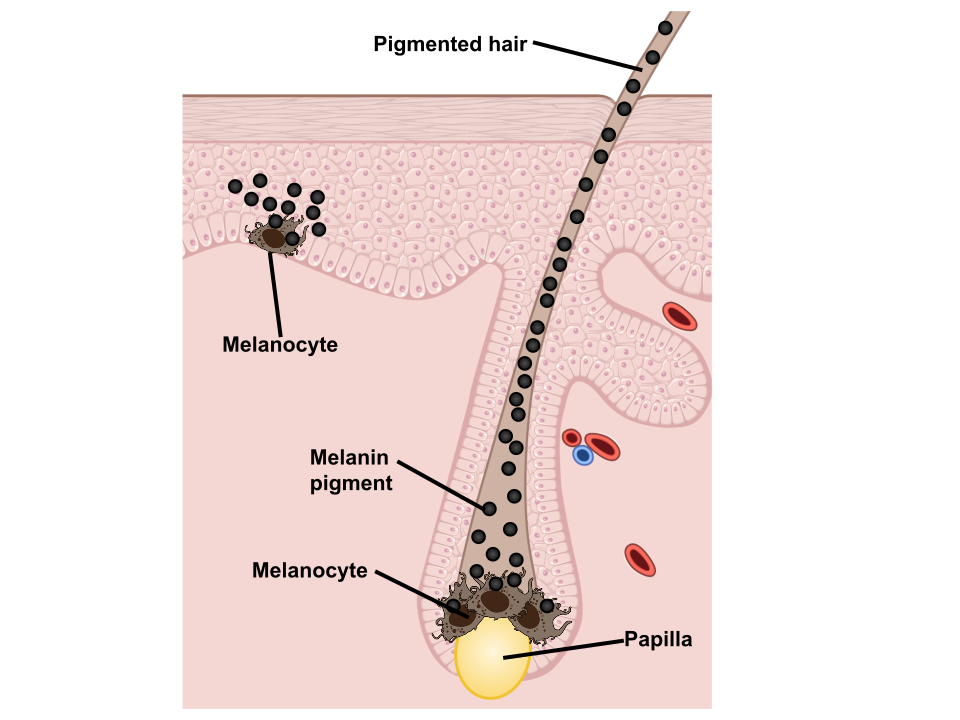
There are two basic pigmented cow coat colors: black and red.2 These colors are determined by two types of melanin pigments, eumelanin and pheomelanin. Eumelanin is black or brown and causes “black” coat colors, while pheomelanin causes “red” coat colors. Cow coats typically fall on a spectrum between these two colors, based on the presence and quality of these two pigments.1,2 These different shades include light and dark reds, browns, grays, and creams. Additionally, cow coats can also lack pigment due to mutations that cause a complete absence of melanin (like in albinism!), causing a white coat color.1
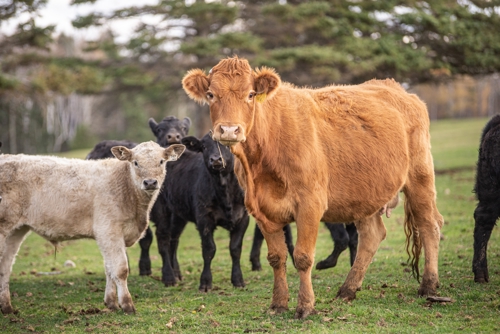
To further complicate things, cow coats can come in a variety of patterns! These patterns include spots, stripes, leopard, speckles, and more!1 Coat patterns can arise from a variety of mutations affecting melanocytes, pigment production, or pigment distribution.
For instance, white coat areas can arise from differences in melanocyte migration during development. If melanocytes don’t reach a spot in the cow’s skin during a specific time period during development, that spot will have no melanocytes and therefore no pigment. Accordingly, that part of the cow’s coat will stay white.1
Mutations that cause pigment type switching provide another example of how cows’ coats can come to have different patterns. Some mutations will make melanocytes switch what type of pigment (eumelanin or pheomelanin) they produce.1 If this happens in somatic cells during early development, it can lead to areas of coat with a different color than the base coat.
Mutations or differences in gene expression affecting pigment distribution or transport into the cow’s hair can also cause patterning.1 Overall, patterns result from localized events causing a difference in the abundance of eumelanin or pheomelanin in specific spots compared with the rest of the coat.
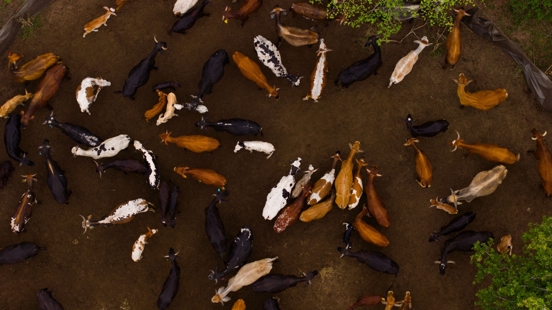
So, why are there so many cow coat colors compared to other animals?
Like in any other animal, mutations that cause new coat colors and patterns occur in cows. However, the selective pressures that determine if a cow with a different coat color or pattern can survive are different from those present for many other species!
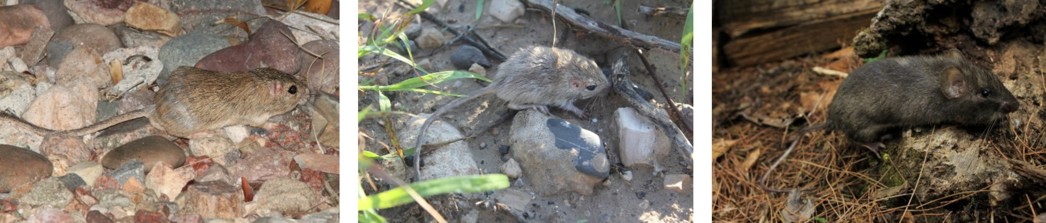
In the wild, traits like coat color can be extremely important for survival, so specific coat colors dominate in different environments. As different traits (in this case, coat colors) arise through mutations, the process of natural selection eliminates those that do not provide an advantage. A classic example of this is coat color allowing camouflage, where the same species can have different coat colors based on what will allow them to blend in best with the local environment to avoid predators. In this case, individuals with highly visible coat colors are more likely to die through predation and produce fewer offspring than individuals who can camouflage and avoid predators. Coat color evolving to match the local environment occurs in many species, but pocket mice provide a great example as their fur color matches rocks in their local environment!3,4
Domesticated animal species typically have a much wider variation in coat colors than wild animals.5 This is because the selective pressures that domesticated species like cows are subject to are vastly different from wild animals.
During domestication, a species is removed from many of its natural selective pressures and is instead subjected to “artificial selection” by humans.6 The evolutionary pressures provided by humans onto domesticated animals are a combination of the early artificial selection during the original domestication of the species, and more modern selective processes through breeding.6 Altogether, artificial selection creates domesticated species that are adapted to be most evolutionarily fit in a context of selective pressures created by human preferences, human-centered environments, and human behavior.
In early domestication of cows, specific coat colors were favored.5 Although the exact reasons for selection of different cow coat colors and patterns can only be speculated upon, they could have been chosen due to practical reasons, like higher livestock visibility or a perceived association with higher quality cows. They also could have been chosen based on farmers’ personal preferences.5 Regardless, cows and other domesticated animal species are examples where the major selective pressure for coat color evolution comes not through classic predation or the ability to survive in harsh environments, but rather through their association with humans. This same concept applies to many other domesticated animals, like dogs and horses!
Does coat color affect a cow’s fitness in different environments?
Although cow coat color is thought to occur mostly through human intervention and artificial selection rather than them living in different habitats, different coat colors can still make cows more suited to different environments. Coat colors can affect how a cow responds to environmental factors like temperature and water availability. For example, a study found that black Holstein cows had better survival in tropical Southeast Asia and Hawaii than white cows, possibly through better cooling.7 So, even though cow coat colors are mostly due to human preferences, environmental factors in different habitats can still influence the evolutionary fitness of cows with different coat colors!

_(7-14-12)_78_circulo_montana,_patagonia_lake_ranch_estates,_scc,_az_-01_(7578750708).jpg)



Author: Isabela Fuentes
This answer was written and published in 2026, when Isabela was a PhD student studying lung adenocarcinoma and alveolar stem cells in the labs of Dr. Peter Jackson and Dr. Tushar Desai. Isabela wrote this while participating in the Stanford at The Tech program.