 Skip Navigation


Can we make human cells from scratch?
July 15, 2026
- Related Topics:
- Synthetic biology,
- Cell biology,
- Biotechnology
A curious elementary school student at The Tech Interactive asks:
"My dad says we know cells are made out of oxygen, hydrogen, and carbon. Since we know this, could we make cells in a lab using those ingredients?"
In theory, yes!! Though scientists have not yet succeeded in making human cells entirely from scratch… BUT scientists do know how to grow these cells in the lab and do it all the time.
What are cells made out of?
Let’s focus on human cells to answer this question (though other types of cells are also made of the same components). All human cells are almost entirely made of the basic elements oxygen, carbon, nitrogen and hydrogen. These are the building blocks that come together to make all of the parts of a cell.
Oxygen is the most abundant element in cells and makes up about two-thirds of the cell. Carbon and hydrogen are next, and nitrogen only makes up a super tiny part of cells.
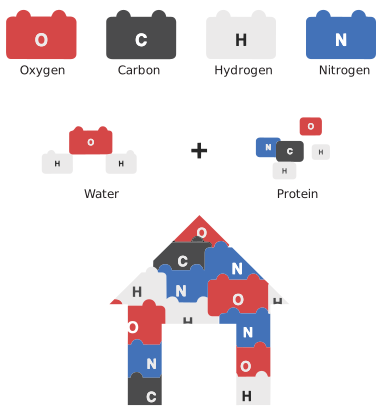
These elements come together to form things like water, fats, and proteins that our cells are built from. You can kind of think about this like Lego blocks. Oxygen, carbon, hydrogen, and nitrogen are each a different Lego block, and depending on how you snap them together, you can build all sorts of things - a chair, a table, or even an entire Lego house. In the same way, these elements come together in different patterns to build a single water molecule or even an entire cell.
Why can’t we make cells from scratch yet?
There’s a lot we don’t know about how all the building blocks come together to make cells. Cells are extremely intricate machines and we just haven’t unlocked all their secrets yet.
Human cells have about 20,000 genes! These genes are instructions for how to make all the proteins that a cell is made out of. We aren’t sure what all of them do, which makes it hard to know how to put them all together.
It’s kind of like if someone gave you an ingredients list for baking a super complicated cake, but they didn’t give you the part of the recipe with the instructions for actually baking it. You kind of know how many eggs and how much sugar and flour to add, but you don’t know any of the steps for correctly mixing it all together.
What do scientists do instead of growing cells from scratch?
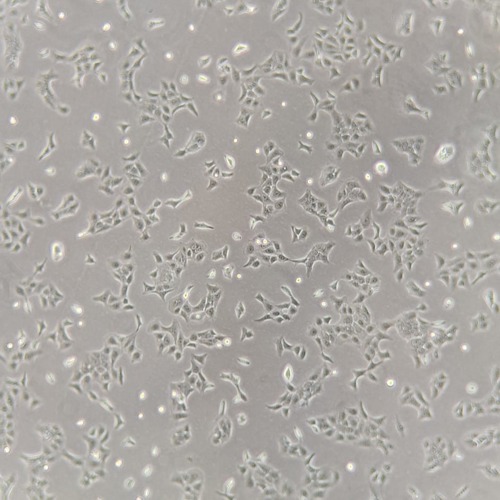
Cells are like little factories that make copies of themselves, so instead of doing the hard work of putting all the building blocks together ourselves, we can have cells do it!
In order for this to work, scientists figured out all the picky things cells need in order to survive. They like moisture and a warm environment of 98.6 degrees fahrenheit (just like the insides of our bodies). On their own, cells are very prone to infection so scientists also have to make sure they stay sterile – no bacteria or viruses allowed!
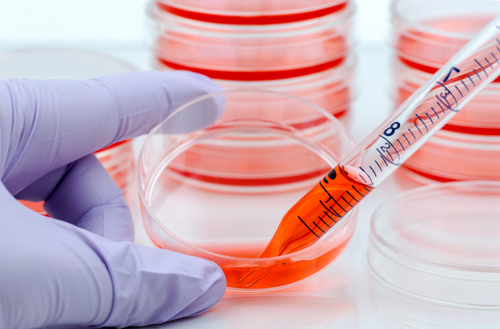
Just like we need to eat, all of our cells do too. Figuring out what our cells like to eat was one of the major challenges in growing them in the lab. Scientists figured out how to put together the perfect meal to make our cells happy. It’s a pink liquid made of special sugars and proteins.
What kinds of cells can we grow?
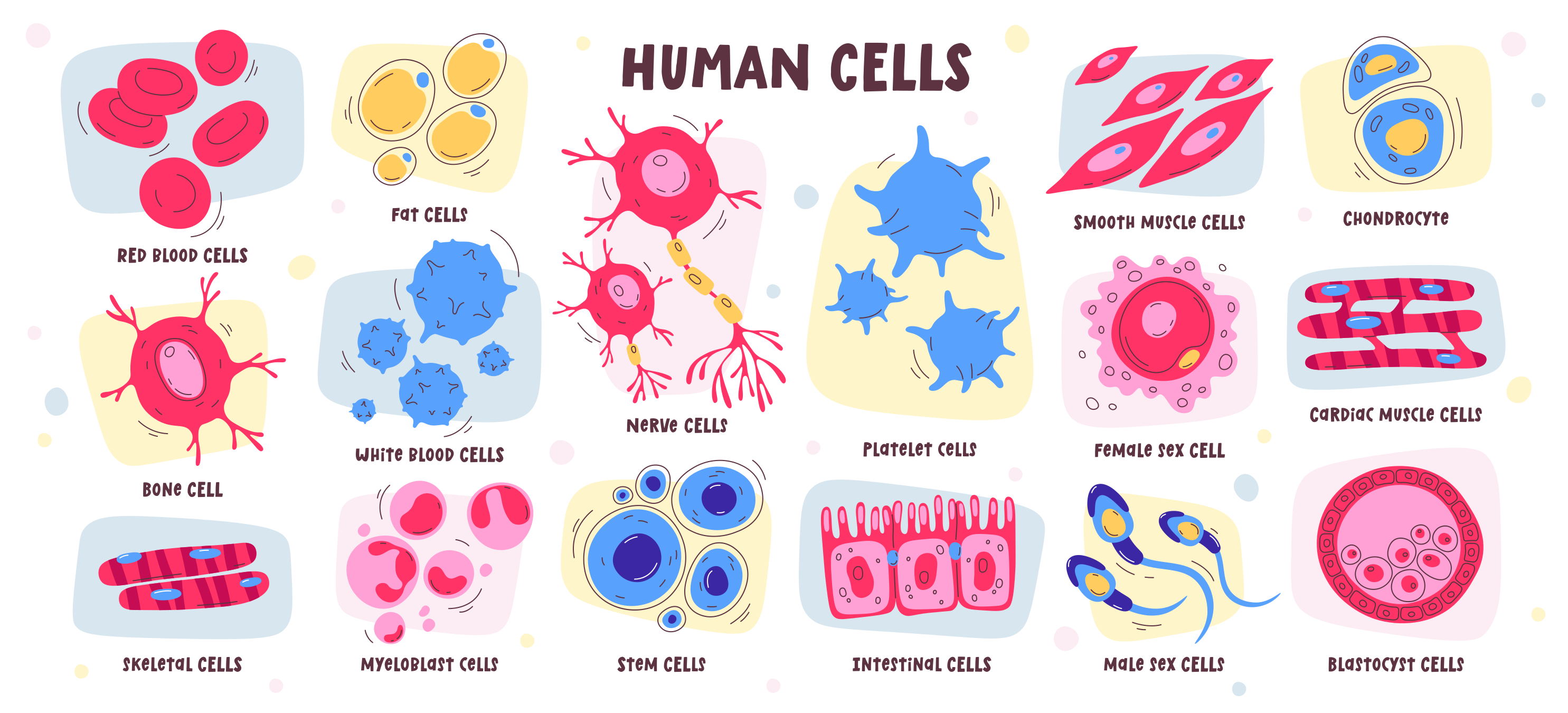
Our bodies contain many types of cells from muscle cells that let us move, to immune cells that protect us from getting sick. Because each type looks and behaves differently, scientists need to study different cell types depending on the disease or biological question they’re investigating.
Today scientists have thousands of different cell types in the lab to choose from.
How close are we to making cells from scratch?
Actually pretty close! Scientists have successfully tried two different approaches to make simple types of cells.
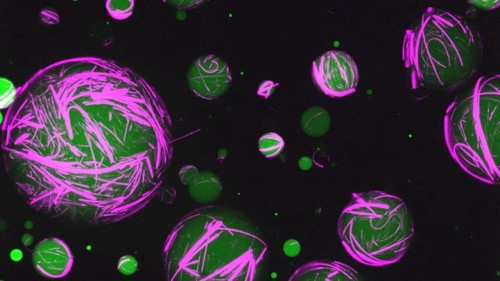
Approach one: We call this one a bottoms-up approach. It’s probably what you think of when we say make from scratch. That means scientists start from the very smallest components and put them together to make a cell. The picture above is from researchers who did this! It is a very simple version of a cell and can only do a couple of things like carry DNA and maintain its circular shape - which is actually a really hard thing to make artificial cells do. The pink part is called a cytoskeleton and like its name suggests it gives the cells their structure.
Approach two: This is the top-down approach. Scientists started with a perfectly good cell and stripped it of everything they could until they had a shell of a cell. Then they added in exactly what they wanted, like specific proteins and DNA that decide how that cell acts and looks. These cells are able to divide on their own!
Why would we want to make cells from scratch?
As I mentioned earlier, all of the cells that scientists use in the lab were originally taken from real people and animals. Unfortunately, some of the first cells were taken from people who didn’t agree to have them used for science. Other people that once were okay with donating their cells might decide they no longer want them being used for research.
By using lab made cells, we wouldn’t have to rely on people as a source, which eliminates a lot of complicated bits.
Now the fun part! Making cells from scratch means we get to decide exactly what goes into them. Cells actually have a lot of components that aren’t always necessary and removing those could create super efficient cells that do exactly what we want them to. These synthetic cells would allow us to make drugs, answer complicated questions about diseases, and learn more about what makes a cell a cell!



Author: Andrea Carroll
When she wrote this article in 2026, Andrea was a Ph.D. candidate in the Microbiology and Immunology Department. She studies how the bacteria in our guts communicate in Dr. Leonor García-Bayonas lab. Andrea wrote this article while participating in the Stanford at the Tech Program.