 Skip Navigation


Do ginger cats’ genes shape personality and appetite?
May 28, 2026
- Related Topics:
- Animal biology,
- Red hair,
- Freckles,
- Chromosomes
A curious adult from Pittsburgh, PA asks:
"What are the genetic ties to unique personality traits of ginger tabby cats? Some examples are intelligence, trainability, affection and playfulness."
Ginger tabby cats, with their orange coats and distinctive patterns, have captured the hearts of many cat lovers. But can this coat tell us about the personality and appetite of the cat? Beyond their captivating appearance, these cats exhibit unique personality traits that have intrigued pet owners and scientists alike. This article will explore the genetic ties to what makes ginger cats so special.
The Genetic Answer to Ginger Coloration
It is known that 98% of cats are not purebred, and since the domestication of cats 10,000 years ago, cats have intermixed significantly, providing a diverse genetic background. If ginger cats are not a unique breed with a very specific genetic makeup, what makes some cats gingers?
Approximately 80% of ginger cats are male, largely due to the inheritance of the “orange coat” gene, which is sex-linked. Male cats only need to inherit the gene from their mother, while females require copies from both parents to exhibit the orange coloration fully. This is because the “orange coat” gene, known as ARHGAP36 in the science world, is located on the X chromosome, and males have one X chromosome. Since females have two X chromosomes, if the gene is not passed down from each parent, females will not become orange tabby cats. However they could become what are called “Tortoiseshell cats”, so named because their coat, which is usually brown mixed with some orange and white, resembles the shell of a tortoise.
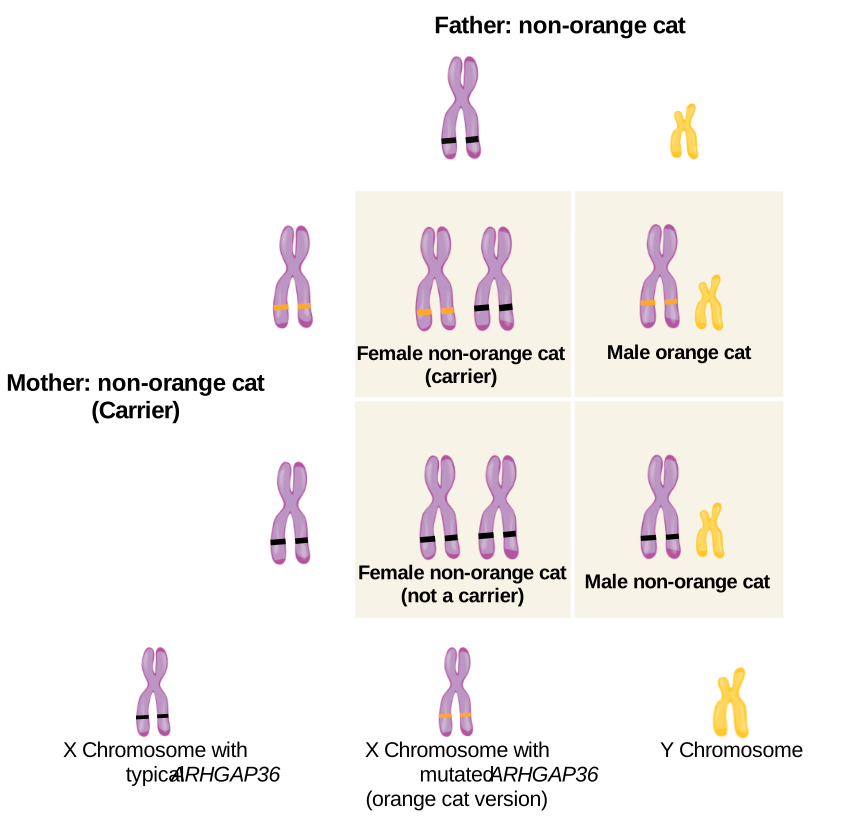
According to Stanford research from 2025 by Christopher Kaelin, PhD, “the mutation in orange cats seems to turn on ARHGAP36 expression in a cell type, the pigment cell, where it’s not normally expressed.”1 Therefore, the amount of orange tortoiseshell cats can have depends on how many cells in their coat are expressing this gene.
Affection and Trainability: Are They Genetic?
Many owners have characterized orange cats as affectionate and trainable, but the connection between these traits and genetics remains somewhat elusive. An interview conducted by Jason Bittel from National Geographic in 2025 with Carlo Siracusa, a clinical scientist at the University of Pennsylvania, indicated that variations in personality traits are based more on breed than on coat color.
While many anecdotal reports suggest that orange cats are friendly and outgoing, it’s crucial to note that these claims are often based on pet owner perceptions rather than scientific observations. According to a 2016 survey study by Sircusa, cats with tabby patterns, which include all ginger cats, were shown to have heightened aggression and an increased interest in prey, but these findings require more extensive research for validation.2
Appetite and Food Regulation
Interestingly, orange cats have earned a reputation for struggling with food regulation. This has led many to question whether there is a genetic link involved. While there isn’t direct research confirming a connection between the gene responsible for orange coloration and appetite control, some genetic factors could influence metabolism. Observations consistently show that orange cats can be more prone to obesity, but this could also be influenced by their playful nature, leading them to show less restraint around food.
Lentigo: A common Genetic Trait for Ginger Cats
One fascinating genetic trait found in many ginger cats is lentigo, or the development of freckles on their noses and gums. This condition, known as Lentigo Simplex, is purely cosmetic and does not develop into melanoma.3 These freckles occur as cats age and can appear at around two years of age, spreading across various visible areas like lips, gums, and even footpads. It is suggested by veterinarians to keep an eye on the freckles as other melanoma marks could be passed unnoticed in between lentigo freckles.
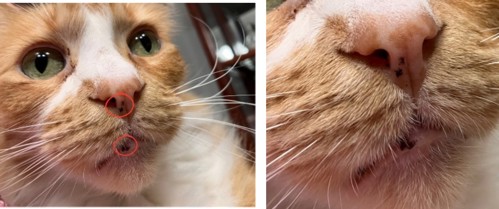
Are the stripes genetic?
Every ginger cat displays this tabby design, which arises from genes present in all felines, like cats and tigers. The famous 'M' mark in their forehead comes from the same 'agouti' gene responsible for creating their tabby pattern in the rest of the coat.4 The purpose of this pattern is to help in camouflaging them while they hunt for prey.
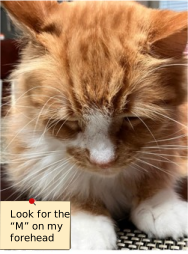
Conclusion: The Beauty of Genetics and Individuality
In summary, while genetic and behavioural scientific insights have unveiled the mechanisms behind their beautiful orange coloration and some specific traits like lentigo, the broader questions regarding personality traits remain largely anecdotal and speculative.
Perhaps the best takeaway is that, while genetics may offer hints, it is the individual cat’s environment, experiences, and relationships that ultimately shape their behavior.
Photo credit for banner image: Gina Ramirez

Read More:
- Scientists track down mutation that makes orange cats orange
- Lintigo Simplex - Freckled Noses in Orange Cats
- Ginger Cats: What makes them unique is beyond coat-deep
- What makes Ginger cats so unique? - Cabbagetown Pet Clinic
- When did cats become domesticated? New DNA evidence changes the story. | National Geographic

Author: Paulina Bargallo
When this answer was published in 2026, Paulina was a Life Science Research Professional in the Department of Genetics, doing research in Lung Cancer at Monte Winslow’s laboratory. Paulina wrote this answer while participating in the Stanford at The Tech program.