 Skip Navigation

Mechanical Animal
Duration: 70 minutes
Grade Levels: 4th-12th grade
This lesson was developed for The 2027 Tech Challenge: Game On!
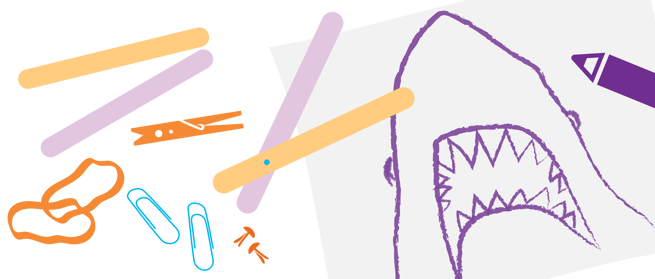
What do folding chairs, car wipers, window hinges, and puppets have in common? They all use mechanisms! Mechanisms are groups of connected parts that allow you to control how things move.
Some mechanisms, like scissors, use simple linkages. Others, like the mechanical characters in amusement parks, use cams, gears, and pulleys to create complex, surprising movements. This activity is an open-ended exploration of mechanisms and the types of motion they can create.
Concepts/Skills: Mechanisms, mechanical motion, energy transfer, forces, engineering, prototyping, testing
Objectives:
- Identify how simple mechanisms transform an input action into a different output motion
- Build a reliable mechanical prototype using accessible materials
- Apply features and designs to connect their mechanism’s motion to a specific animal movement.
Background Information
A mechanism is a system of moving parts that work together to create action. Examples of mechanisms include levers, gears, springs, pulleys, and linkages. Whenever you squeeze a pair of scissors, ride a bicycle, or open an umbrella, you are using a mechanism!
Engineers use mechanisms to take an input force like a push or turn of a hand and transform it into a different action. They design systems to create four main types of motion: linear, rotational, reciprocating, and oscillatory.
Examples of mechanical motion
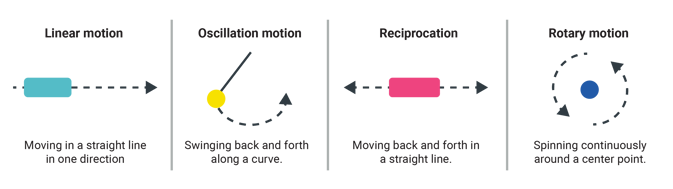
By combining these motions with the help of mechanisms, engineers can solve complex problems:
- In space exploration, Mars and lunar rovers use linkages as legs to climb over big, uneven rocks.
- In construction, excavators and other big machines use levers and gears to dig up massive amounts of dirt or move heavy objects.
- In medical technology, robotic prosthetics have pulleys and cables that mimic human muscles, allowing a person to gently grip things or accomplish delicate tasks.
- In entertainment, theme parks have lifelike animatronic creatures or characters that dance on stage with the power of gears, levers, and cams.
Which of the four motions will your students use to bring their Mechanical Menagerie to life?
 Materials
- Pencil or pen (1 per student)
- Meet the Mechanisms Handout (1 per pair)
Building Materials
Find a couple items from each category. Don’t limit yourself to the objects on this list. Use whatever you have on hand, be creative!
| Per class of 32 students | ||
| Structural Pieces (50+) |
Round Objects (50+) |
Connectors (100+) |
|
|
|
| Energy Storage (50+) | Personality (30+) | Tools |
|
|
|
 Preparation
- Gather materials, print Meet the Mechanisms Handouts (1 per student).
- If you are re-using cardboard from packaging for structural pieces, cut some of it into smaller parts:
- Make linkage links: cut the cardboard into strips approximately 1 inch wide and 4 - 8 inches long, then punch holes into the middle and at each end
- Make a “pegboard” base: give each student a pre-cut piece of cardboard with a grid of pre-punched holes
- Make panels that students can assemble into smaller boxes or platforms
- Try out the activity yourself, with other educators or kids you know. This will give you practice with the resources so you can anticipate student questions.
- We recommend saving any examples of animal mechanisms you have made to share later rather than demonstrating them first. If students are shown an example right away they tend to try to recreate it. When students are given a chance to explore with materials on their own first it can lead to unique and surprising creations.
Outline
Frame the Challenge |
10 min total |
|
Activate Prior Knowledge |
5 min |
|
Introduce the activity |
5 min |
Activity |
60 min total |
|
Research the mechanism |
15 min |
|
Build the animal prototype |
30 min |
|
Tour the zoo |
10 min |
|
Debrief |
5 min |
 Lesson Directions
Activate Prior Knowledge (5 min)
- Define the term mechanism for the class as “A system of moving parts that work together to create action” and ask Guiding Questions about mechanisms:
- What are some examples of mechanisms you have seen in the real world?
- Where have you seen gears, levers, linkages, or springs?
- Next ask them if these mechanisms and motions remind them of any animals:
- For example: a pair of scissors or a folding chair opening and closing may remind them of a snapping alligator
- The spring on a pen may remind them of a jumping kangaroo
- Point out that toys, games, and even displays at theme parks often use mechanisms to design creative moving animals.
 Adaptation for Advanced Engineers: Biomimicry
Humans often look to nature for lessons on how to solve complex problems. After all, nature has been running design tests and refining bio-mechanical motion for millions of years! When engineers get stuck, they get inspiration from how animals and plants have already solved the problem:
- Aerospace engineers study how peregrine falcons fly as inspiration for high-speed aircraft design.
- Robotics engineers design flying drones with legs that absorb impact and grip walls, allowing them to land smoothly like birds or insects.
- Search-and-rescue teams use flexible robots that slither like snakes or extend like growing vines to navigate collapsed buildings.
Interested in exploring more examples of biomimicry? Check out the Biomimicry Mash-Up lesson plan
Introduce the Activity (5 min)
- Tell students that they will become toy designers and create a whimsical Mechanical Animal using everyday materials to arrange into a classwide mechanical zoo.
- Review the steps of the activity with students:
- Research the mechanism
- Build the Mechanical Animal prototype
- Tour the Mechanical Animal zoo
Activity
Research the Mechanism (20 min)
- Have students get into pairs for the activity. If students are participating in The Tech Challenge, have the team divide into pairs and create different mechanisms.
- Show students the Mechanical Catalog and Meet the Mechanisms Handout.
- Review the different types of mechanisms provided (lever, linkage, mass and spring, and gears).
- Note that these are not all the mechanisms in the world, but just a few to get them started.
- Using the Meet the Mechanisms Handout, ask them to identify the input and output parts and trace the motions of each mechanism with arrows.
- Have students review the available materials for making their Mechanical Animals.
- As students touch and explore the materials, encourage students to consider how the parts may combine to make a mechanism.
- As students observe how each mechanism moves, encourage them to imagine possible animals that they could create.
- Does it have flapping wings?
- A wiggly head or tail?
- Bending legs?
- A mouth you can open and close?
- Have the students select an animal action and one mechanism from the list below the Catalog. They will try to create a mechanism that makes this action.
- Ask the students to draw a quick sketch of the animal, showing how it will move with arrows
 Tip: Many Mechanisms
The same animal motion can most likely be re-created with different mechanisms, so your students might have multiple options. For example, you could create a pinching crab claw with levers or gears. Or you could make a frog’s tongue with a scissor linkage or a mass and spring. Be creative!
Mechanical Catalog
Use these animated models to study how different mechanisms move and decide which one will bring your Mechanical Animal to life!
-
1/4 items
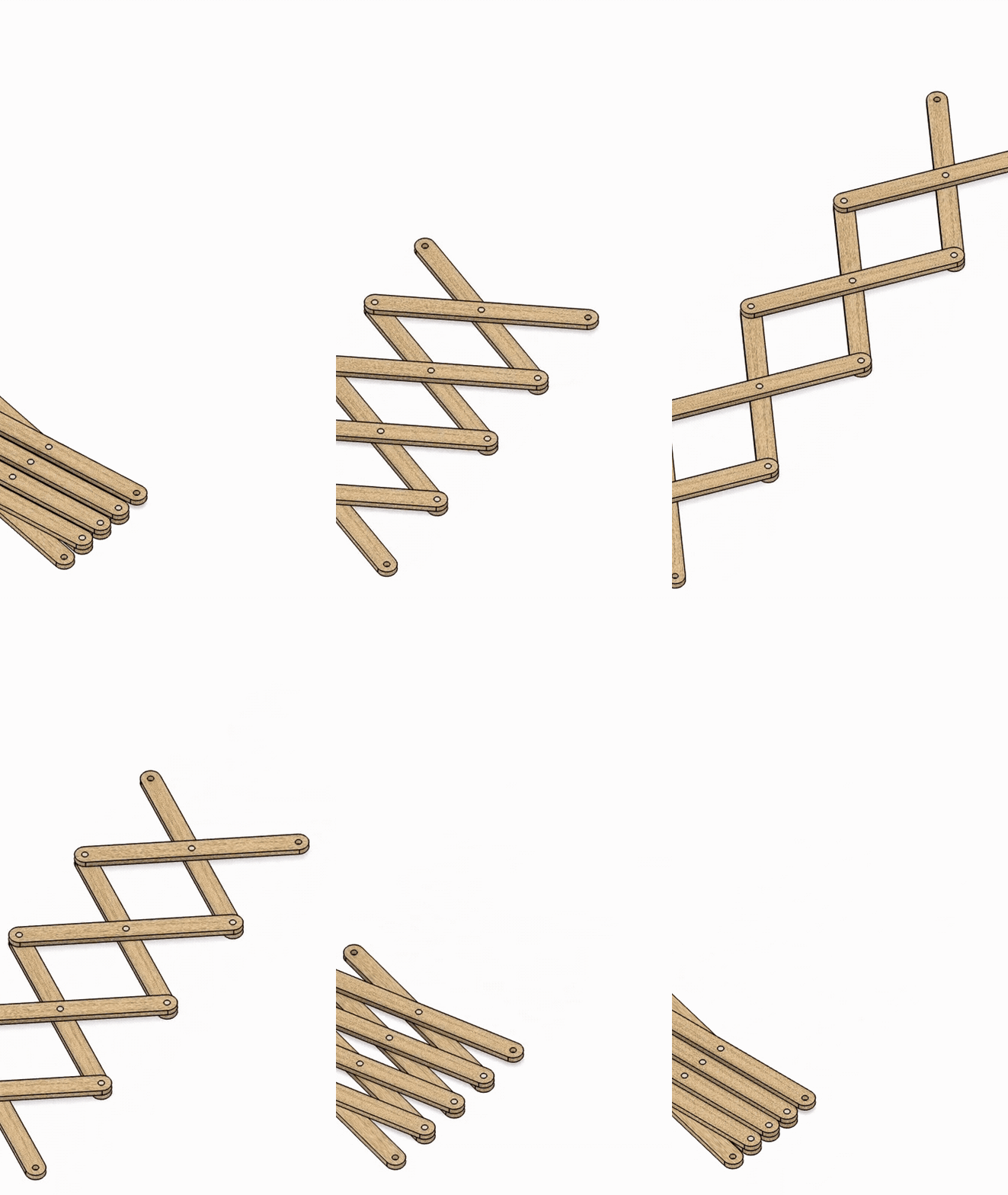
Scissor linkages help turn a small squeeze or push into a long, reaching linear motion.
🧩 Use this mechanism to make a boxing glove shoot across the board or a surprise obstacle extend into the play area!
🌍 Scissor linkages are found in scissor lifts, cherry pickers, folding accordion gates, and extending wall mirrors.
-
2/4 items
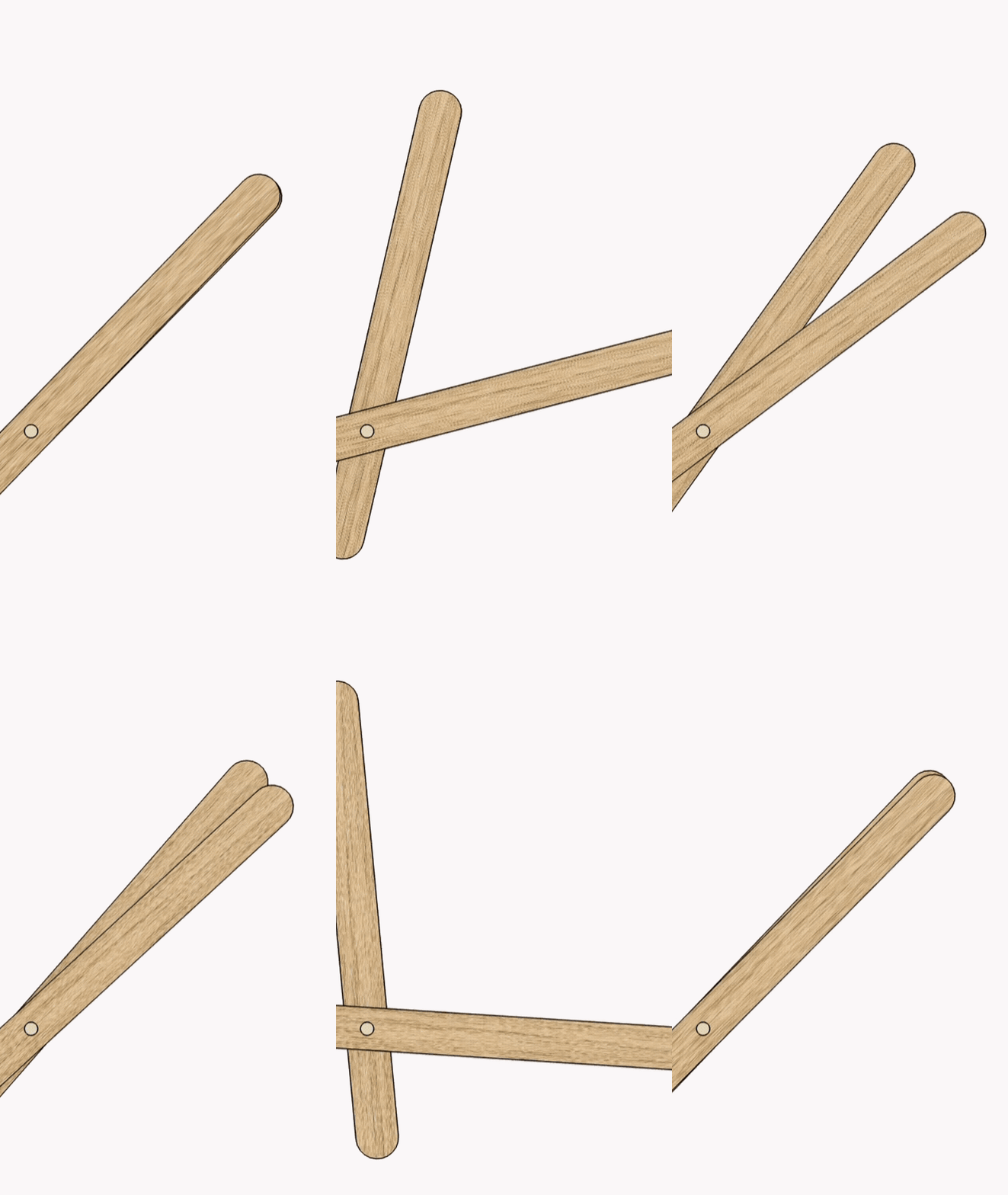
Levers help turn a small push or pull into a larger swinging or lifting motion around a pivot point.
🧩 Use this mechanism to build a pinball flipper, a launching catapult, or a heavy trapdoor!
🌍 Levers are found in scissors, seesaws, wheelbarrows, and crowbars!
-
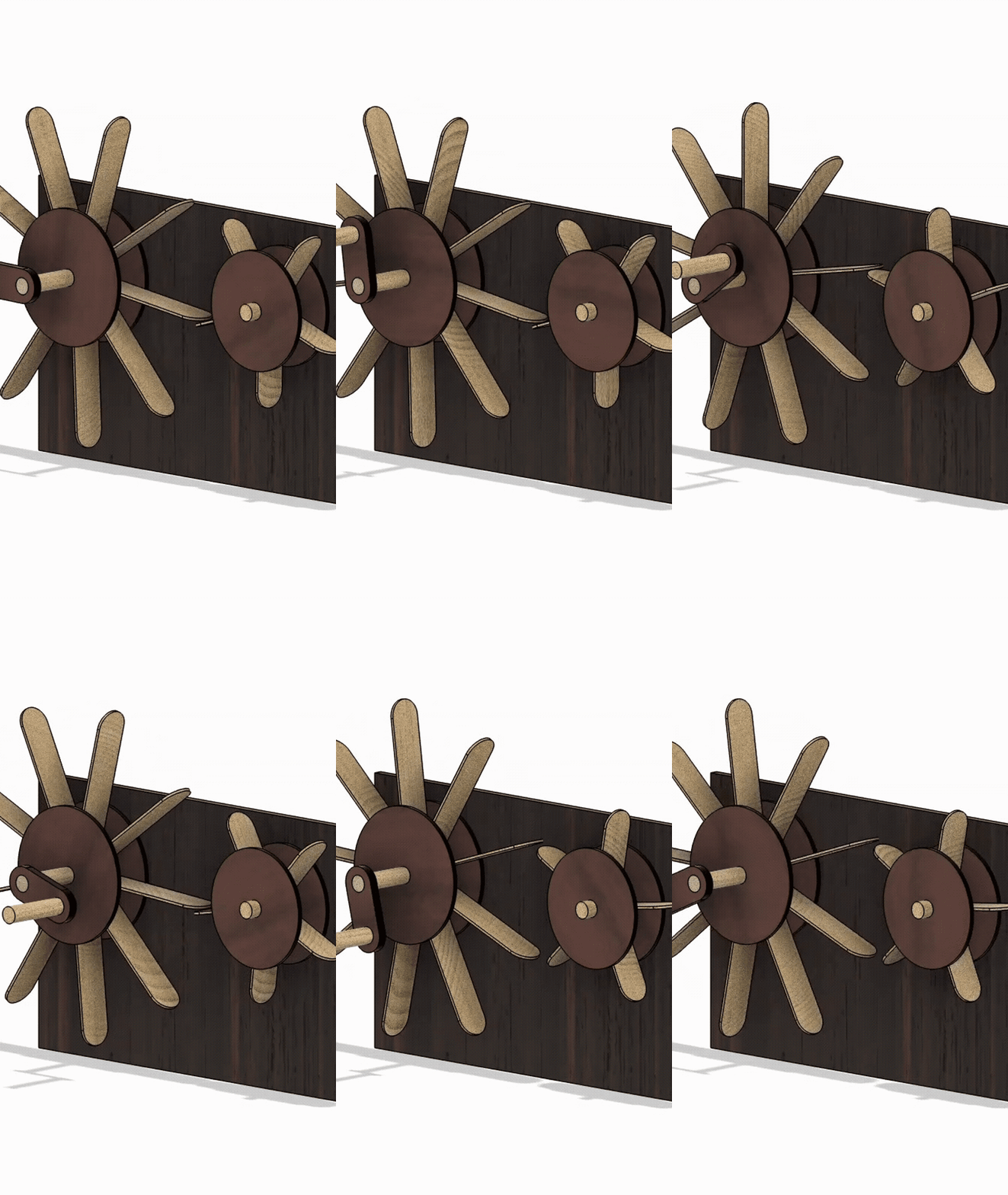
3/4 items
Gears help transfer spinning motion to different places, and can change the speed or direction of the spin.
🧩 Use this mechanism to create a wall of spinning targets, dizzying optical illusions, or a dial that keeps track of the score!
🌍 Gears are found in mechanical clocks, hand-cranked drills, manual transmission cars, and wind-up toys!
-
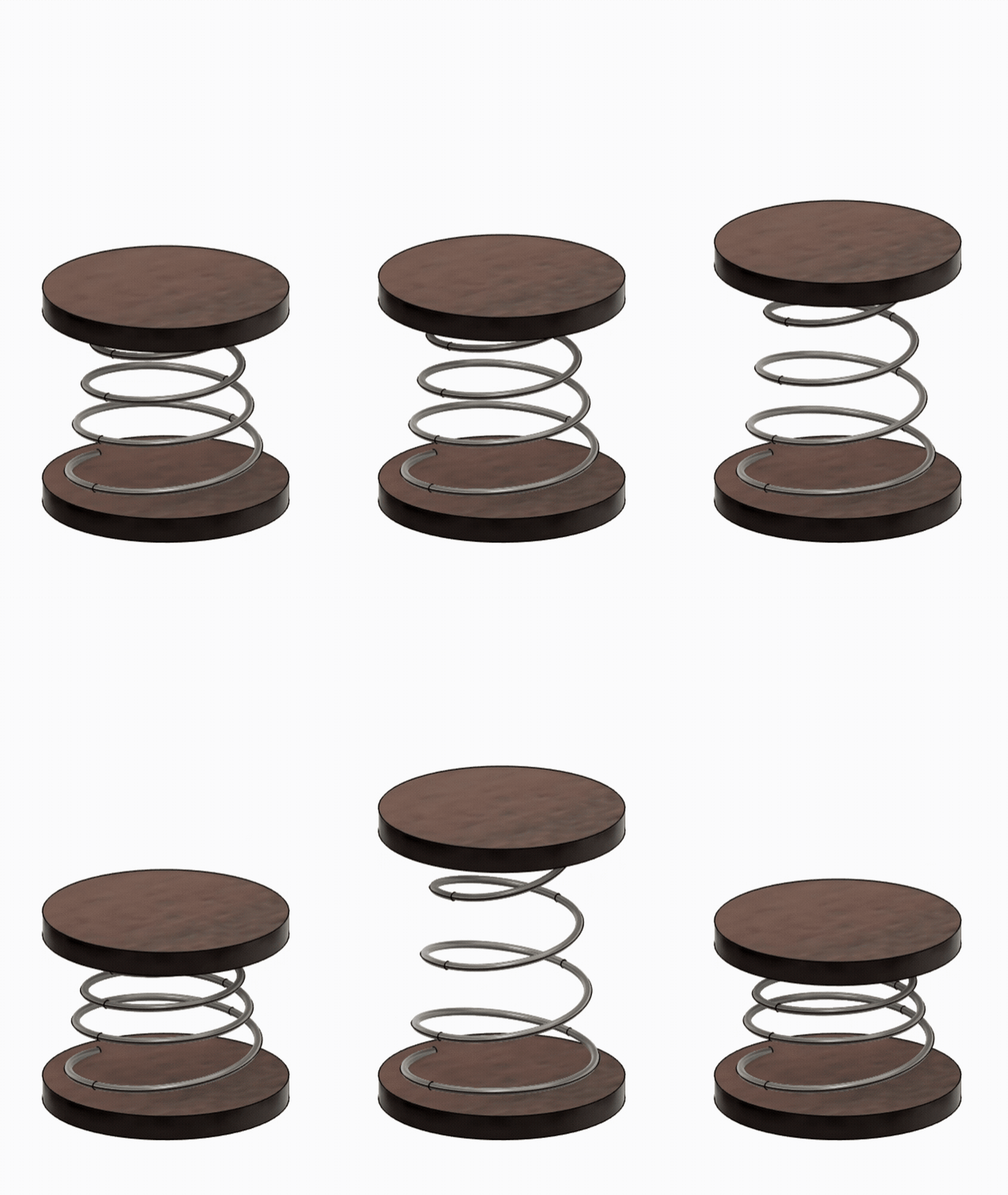
4/4 items
Mass and spring systems help store energy to turn a single pull into a bouncing, wobbling, or repeating linear motion.
🧩 Use this mechanism to create a wobbly bumper, a pull-back launcher, or a target that automatically resets itself after being hit!
🌍 Mass and spring systems are found in car suspensions, pogo sticks, retractable pens, and bobblehead dolls!
Use this table to get inspiration for animal motions that different mechanisms can make.
| How does your animal move? | Mechanism | Example Animals |
|
Chomp or flap |
Lever |
Flying bird chomping shark |
|
Reach or stretch |
Linkage (scissor or parallelogram) |
Striking snake eating lizard |
|
Bounce or wobble |
Mass and spring |
Swimming jellyfish pouncing cat |
|
Spin or synchronized motion |
Gears |
Jumping bug, pinching crab |
Adaptation for Advanced Engineers: Cam and Follower Mechanism
If students already have experience with the 2D planar mechanisms from the list above, challenge them to create a more complex 3D mechanism: the cam and follower.
The cam and follower is a type of mechanism made of an unevenly shaped wheel (the cam) and a stick or bar that rests on it (the follower). When the cam spins, its bumpy shape pushes the follower up and down or back and forth.
Show students a cam and follower visual (like the diagrams and animations in this webpage by Rob Ives) or a physical model without any animal decorations attached and invite them to consider what animals might match this motion. If they have trouble, examples might be a hopping bunny, jumping dolphin, or peeking gopher.
Optional: To streamline the building process, you can provide pre-made cardboard boxes or 3D frames so students can focus on making the moving parts.
More Resources
- Video: “Building Curiosity: Rover Rocks Rockie-Bogie,” uploaded to YouTube by NASA Jet Propulsion Lab (2:04 min)
- Video: “Brunelleschi demonstrates his 3-speed ox-driven hoist,” uploaded to YouTube by Stanford Biomimetics and Dextrous Manipulation Lab (2:54 min)
- Video: “Computational Design of Mechanical Characters,” uploaded to YouTube by Disney Research Hub (5:09 min)
- 507 Mechanical Movements Website, Henry T. Brown and Matt Keveney
- Mechanism, Website by Rob Ives
- Clockwork objects, enhanced learning: Moving Toys in the Classroom, Modern Automata Museum
Build the animal prototype (30 min)
- Have pairs build their mechanism first. Ask them to demonstrate that it can move without breaking or locking before adding decorations.
- Once the mechanism can move reliably, have students attach or draw animal features onto the moving parts.
- If a pair finishes early, encourage them to design more than one animal using the same mechanism. Ask the open-ended questions such as:
- What can you do to make each creature unique?
- How could you build the same mechanism and movement with different materials?
- How can you refine their design so that it works even under repeated testing?
 Tip: Making Reliable Mechanisms
Paper Engineering
Paper isn’t just for decorating your animal! With some simple modifications, paper can become a useful functional component of any mechanism:
- Rolled Tubes (Axles and Sleeves): Roll a sheet of paper tightly around a pencil to make a rigid tube that can be used as a smooth guide sleeve or an axle for a gear or linkage.
- Accordion Fold (Springs): Fold a strip of paper back and forth like a fan to make a simple but snappy compression spring.
- Sharp Crease (Rigid Arms): Fold and crease a strip of paper sharply down the middle to make a stiff “V” or “L” shape that can be used as a sturdy lever arm or linkage.
For more inspiration, check out our Paper Engineering lesson
Wobbly Axles
A skewer or chopstick through a single piece of cardboard might not be stable enough to hold a linkage or gear straight. Remind students to use two layers of cardboard spaced apart or to support one end of the skewer with their hands.
Glued Joints
When building mechanisms, sometimes glue accidentally gets in between pieces that are supposed to move. Check holes and axles or gaps between moving pieces to make sure glue isn’t locking them in place. Even a bit of hot glue or tape can gum up a linkage!
Optional References
If students get stuck, show them some of these examples or share a model that you built yourself.
-
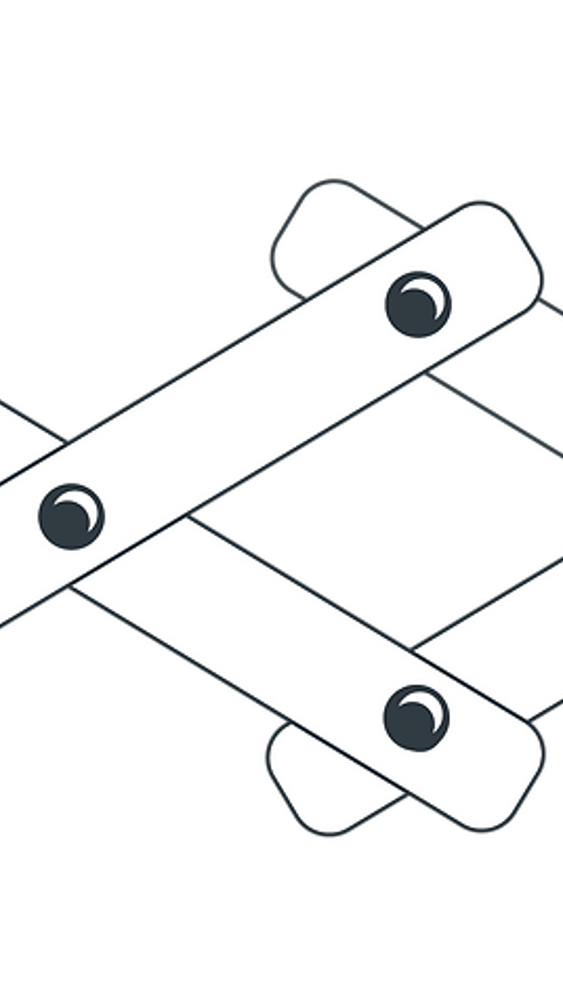
1/3 items
Crocodile made from scissors linkage
-
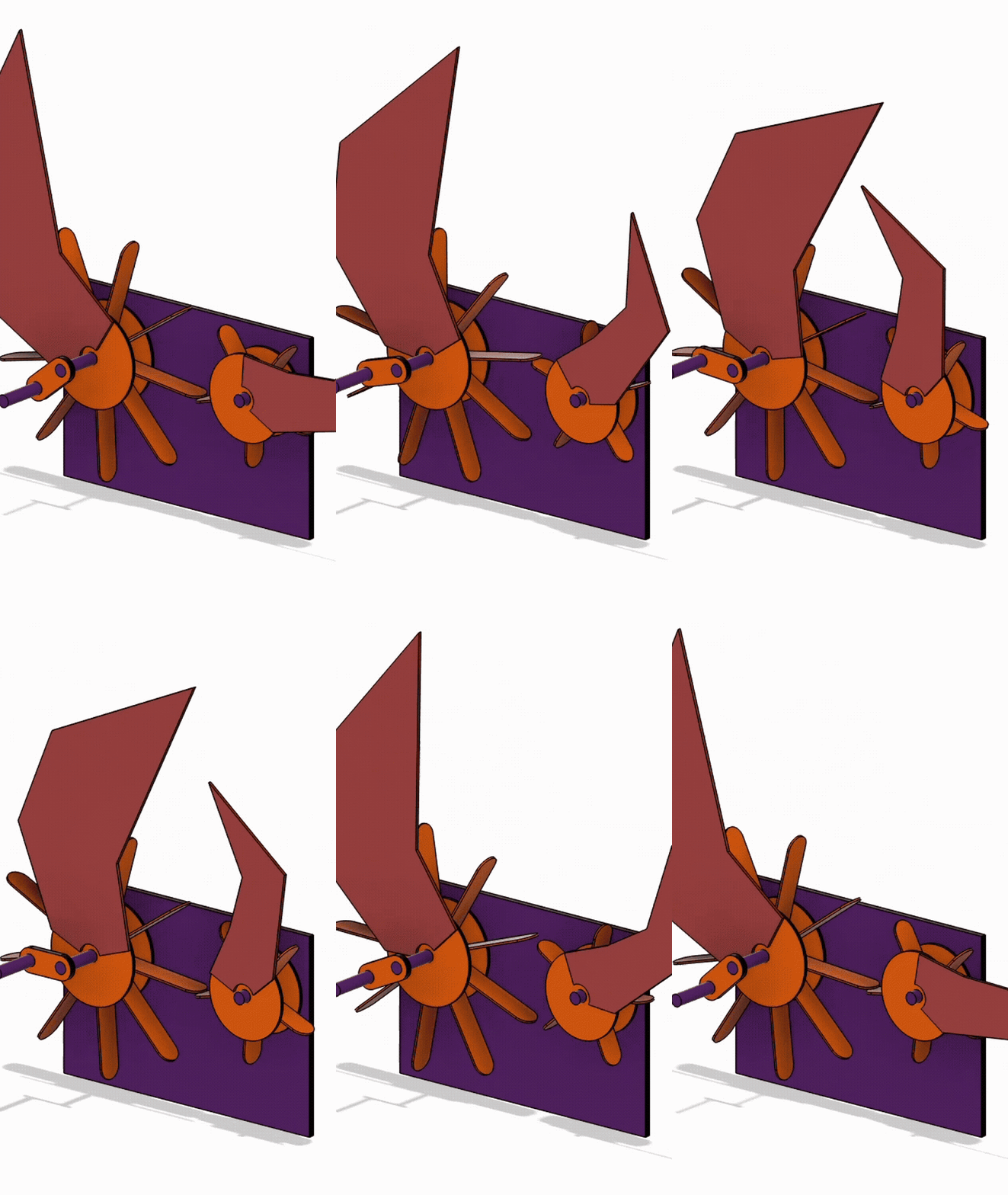
2/3 items
Crab with pinching claws made from gears
-
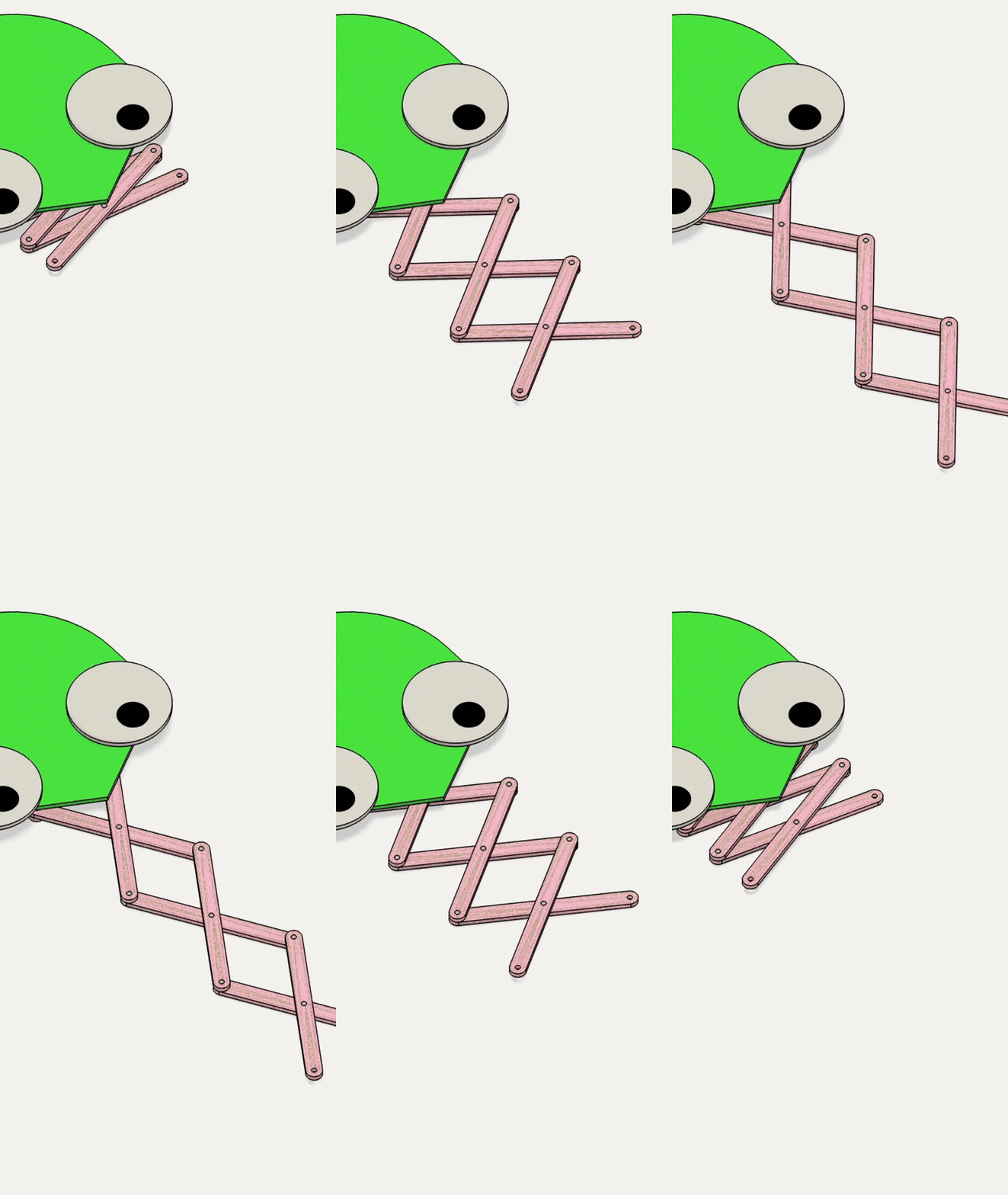
3/3 items
Frog or lizard with extending tounge made from scissors linkage
Tour the zoo (10 min)
- At the end of the time limit, teams stop even if they have not completed their designs.
- Have them share their design so others can see. This can be as simple as placing all of the animals in one long line on a table, or having them parade around the room moving their animals.
- Possible Sharing Questions could include:
- Tell us how your mechanism works.
- What was the most challenging part of getting the movement you wanted?
- What changes would you make if you had more time?
- Invite students to continue to give positive feedback on other team’s designs and encourage them to share suggestions.
Debrief (5 min)
- After students share their designs, lead a short debrief with some of these questions. Possible Debrief Questions include:
- What was it like having to design a specific mechanical movement?
- Which materials were most useful as you were building your design?
- What are other situations where you have seen mechanisms like these being used?
- For these designs you were inspired by animal movement, what else do you think inspires designers and engineers when they are building?
- Teams that are participating in The Tech Challenge should make sure that they capture their designs and ideas in their Team Journal.
Explore More
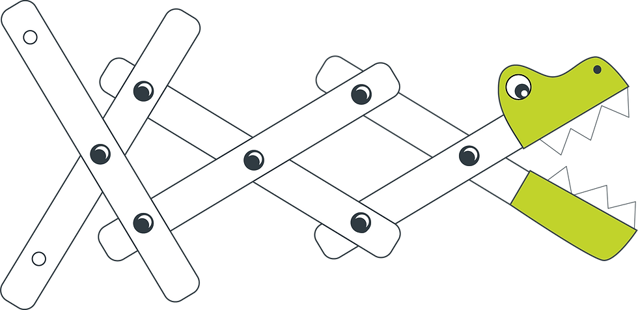
Linkages
Grades 3-12
Explore linkages even further in this activity.

Exploring Chain Reactions
Practice building simple machines like pulleys, ramps, and levers.
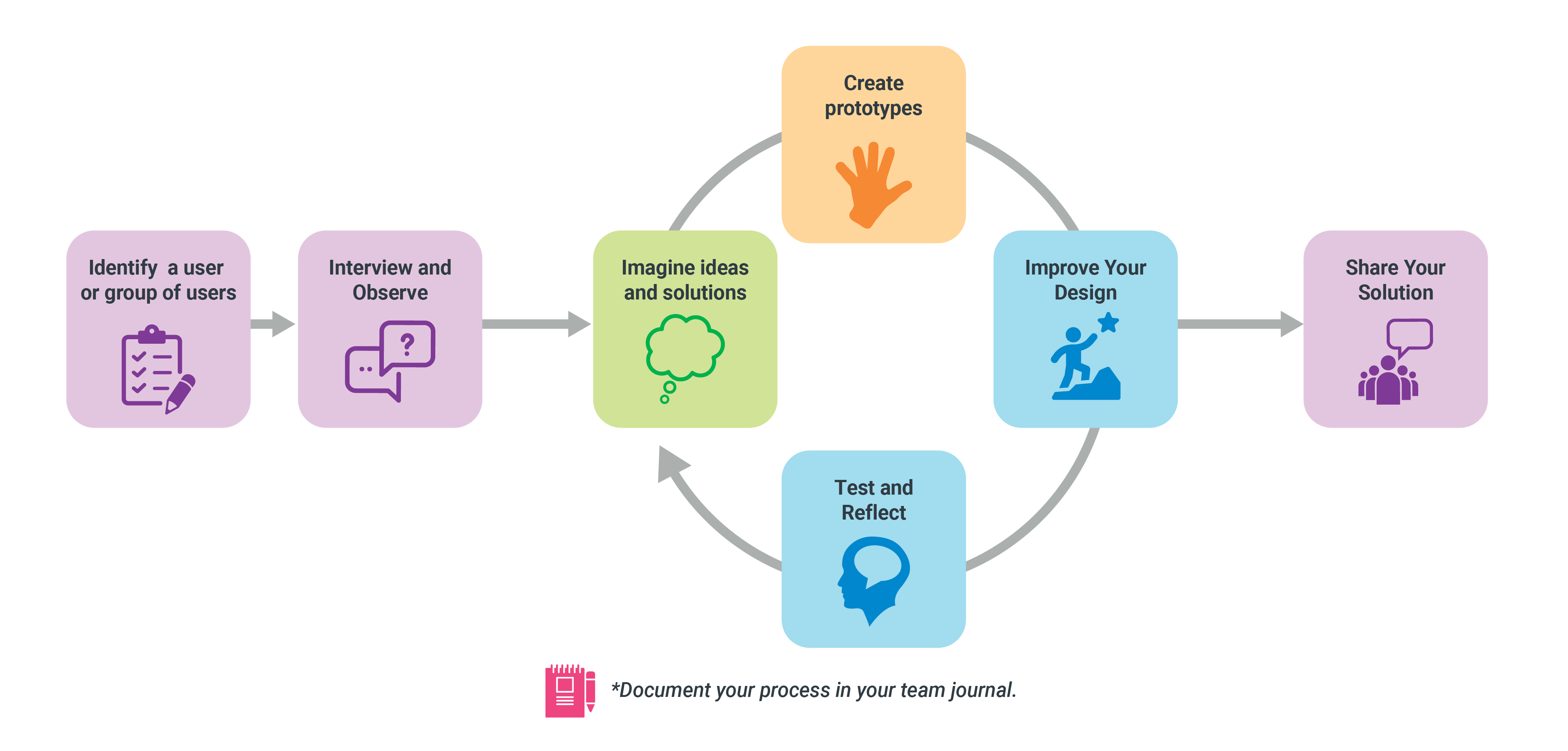
More 2027 Tech Challenge Resources
Explore more resources for Game On!, The 2027 Tech Challenge, including interview and playtesting guides for the User-Centered Design process.
Standards Connections
| Next Generation Science Standards | ||
| Grade | Performance Expectation | Description |
| 3 | 3-PS2-1 |
Plan and conduct an investigation to provide evidence of the effects of balanced and unbalanced forces on the motion of an object. |
|
3 |
3-PS2-2 |
Generate and compare multiple possible solutions to a problem based on how well each is likely to meet the criteria and constraints of the problem. |
| 4 | 4-PS3-4 | Apply scientific ideas to design, test, and refine a device that converts energy from one form to another. |
| 4 | 4-LS1-1 | Construct an argument that plants and animals have internal and external structures that function to support survival, growth, behavior, and reproduction. |
| HS | PS3-3 | Design, build, and refine a device that works within given constraints to convert one form of energy into another form of energy |
| Related Disciplinary Core Ideas |
LS1.A: Structure and Function ETS1.B: Developing Possible Solutions |
|
| Science and Engineering Practices |
Asking Questions and Defining Problems Planning and Carrying Out Investigations Constructing Explanations and Designing Solutions |
|
| Cross Cutting Concepts |
Patterns Cause and Effect Scale, Proportion, and Quantity Systems and System Models Structure and Function |
|
Vocabulary
| Term | Definition |
| Axle |
A rod, stick, or shaft that goes through a spinning part like a wheel or gear. An axle either stays still while the wheel or gear spins freely around it, or it locks tightly to it so they both spin together. |
| Biomimicry | The practice of studying nature's forms, processes, and ecosystems to solve human design challenges and create sustainable technologies |
| Cam and follower | A type of mechanism made of an unevenly shaped wheel (the cam) and a stick or bar that rests on it (the follower). When the cam spins, its bumpy shape pushes the follower up and down or back and forth. For an example of a cam and follower in action, check out this animated diagram from Five Hundred and Seven Movements. |
| Energy storage | The physical part of a device that holds potential energy so you can use it later. Some mechanisms can help store energy and others help turn stored potential energy into kinetic energy and mechanical motion. |
| Failure point | When a break in a system causes a device to work improperly or not work at all. One of the jobs of an engineer is to find failure points so they can fix them, and it's one of the reasons we test again and again. |
| Gears | A type of mechanism made of wheels with teeth around the edges that lock together. When you spin one gear, it forces the other gear to spin, which is a great way to change the speed or direction of motion. |
| Joint |
The connection point where two or more parts meet so they can bend, swing, or pivot. A joint connects parts together like an elbow, a knee, or a door hinge. When you build a linkage, you use joints to connect the different pieces so they can wiggle and fold. |
| Kinetic energy |
The energy of movement. Anything in your device that is moving mechanically in a straight line, spinning in a circle, sliding back and forth, or swinging back and forth has kinetic energy. |
| Levers | A type of mechanism made of a stick or bar that rests on a pivot point (called a fulcrum). Pushing down on one end makes the other end go up. Think of a seesaw or a catapult! |
| Linear motion |
Moving in a straight line in one direction. |
| Linkages | A type of mechanism made from a series of connected sticks or bars that transfer motion from one place to another. If you push or pull on one end of a linkage, the other end might slide, swing, or wiggle! |
| Mass and spring | A type of mechanism that pairs an object (the mass) with a bouncy, coil or elastic band (the spring). The spring acts as the energy storage, holding onto potential energy when you squash or stretch it. When a player, game piece, or another mechanism lets go, that potential energy in the spring becomes kinetic energy in the mass to push or pull back into place. |
| Mechanism | A system of moving parts that work together to create action. Examples of mechanisms include levers, gears, springs, pulleys, and linkages. |
| Mechanical movement | Motion caused by mechanisms or mechanical systems. The four main types of motion are linear, rotational, reciprocating, and oscillatory. |
| Oscillating Motion | Swinging back and forth along a curve |
| Potential energy | Stored energy that can be used later. An object has potential energy because of its position or shape. For example, a heavy ball on top of a ramp or a rubber band pulled tight all have potential energy that can turn into movement. |
| Pulley | A type of mechanism made of a spinning wheel with a rope or string tied around the outside. Pulleys help you lift things or change the direction of a pull – like raising a flag on a flagpole or lifting a bucket from a well. |
| Reciprocating Motion | Moving back and forth in a straight line. |
| Rotary Motion | Spinning continuously around a center point. |

The Tech Challenge
This guide was created to prepare students for Tech Challenge 2027: Game On! Team advisers can use this resource to:
- Familiarize students with different types of mechanisms.
- Practice building prototypes that move.
Get started on this year’s Tech Challenge.