 Skip Navigation


The Tech Celebrates AANHPI Heritage Month 2026
May 1, 2026
Highlighting STEAM leaders
- Related Topics:
- STEM,
- Tech Partners,
- In the Community,
- Education,
- Career Pathways
May marks an important time to celebrate the accomplishments of Asian Americans, Native Hawaiians, and Pacific Islanders (AANHPI) in the United States. It is a time to honor the rich and diverse cultures, histories, and significant impact that individuals from these communities have made in shaping American society. This month we’re highlighting the work of four STEAM innovators who have made noteworthy contributions in various ways.
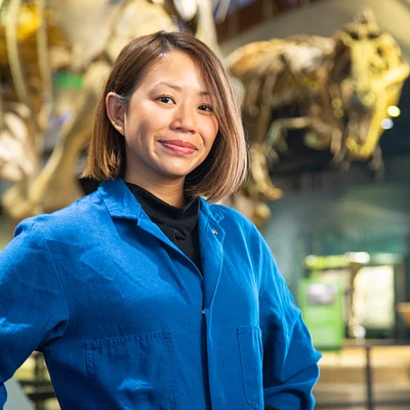
Dr. Helen Tran, Ph.D.
Dr. Tran grew up in San Jose and is currently an Assistant Professor of Chemistry at the University of Toronto, with a cross-appointment in Chemical Engineering. She previously held research fellowships at Stanford, Columbia, and the Molecular Foundry, and earned her undergraduate degree from UC Berkeley. Recognized for her outreach, she was named an AAAS IF/THEN Ambassador and has been featured on Mission Unstoppable and in the Girl Scouts Cadette Badge Workbook.
Although Dr. Tran is a chemist, she originally imagined a future in the arts, drawn to design, photography, and pottery. Her passion for creating and assembling things led her to chemistry in college, where she discovered the beauty of building molecules—much like an architect constructs with simple materials. That moment sparked her path, allowing her to design and create new molecules in the lab, a process that is both challenging and deeply rewarding. For over a decade, Dr. Tran has explored chemistry through the lens of design and structure. Like assembling LEGO pieces, she connects molecules to form polymers, where each connection influences the material’s final properties.
Listen to Dr. Tran speak about her local upbringing and her innovative projects here
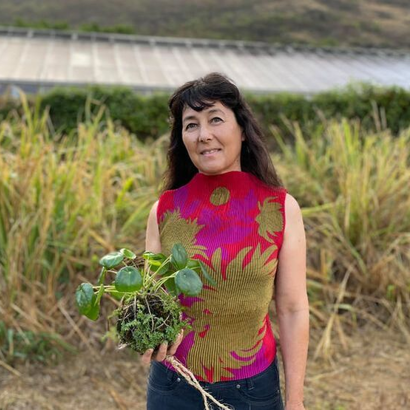
Corinne Okada Takara
For more than two decades, Takara has designed and led STEAM initiatives in communities ranging from East San Jose and Salinas, California, to Hawaiʻi. She co-founded BioJam, now a collaborative program between Stanford’s Department of Bioengineering and Migrant Education, as well as ‘ĀinaQuest. Alongside facilitating biomaterial workshops nationwide,Takara maintains an active art practice, with pieces featured in exhibitions, including the 2024 Getty-sponsored Fathomers Emergence exhibition in Little Tokyo, Los Angeles. Since relocating to Oʻahu in 2022, her work has increasingly centered on place-based materials and the preservation of community narratives, examining how ancestral wisdom can inform contemporary creative practices. These intergenerational stories of resilience and imagination continue to guide her commitment to designing inclusive workshops and artistic spaces that envision abundant, shared futures.
Did you know?
In 2017, Takara designed the mycelium chandelier currently hanging inside of the Tech Interactive’s BioTinkering Lab. Yes, it is made of fungus! This innovation highlights the blending of fiber arts with biology and engineering. The creation came from a bio-design exploration that involved the public in growing reishi fungus into specific molds that formed mycelium light shades. The molds were 3D printed using an algae and plant-based filament and LED lights are what makes it glow!
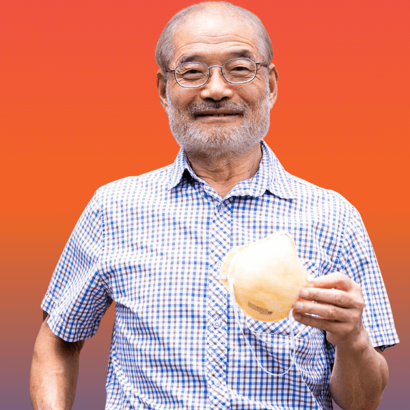
Peter Tsai, Ph.D.
Dr. Tsai is a Taiwanese-American materials scientist and inventor known for developing and patenting advanced meltblown filtration technology used in respirators such as N95 masks. After moving from Taiwan to the United States in 1981 to study at Kansas State University, Tsai earned a doctorate in materials science and completed more than 500 credits across engineering and other scientific disciplines—an achievement he described as “equivalent to six Ph.D.s.” An expert in nonwoven fabrics, he served as a professor at the University of Tennessee before becoming professor emeritus. During the COVID-19 pandemic, he came out of retirement to focus on research related to mask and respirator sterilization.
The N95 mask was initially developed for construction workers to protect against fine dust and airborne particles. In 1996, the U.S. Centers for Disease Control recognized that the mask could also capture viruses. By combining Dr. Tsai’s filtration technology with 3M’s medical mask design, the modern N95 respirator was created and has since been widely used by healthcare professionals worldwide.
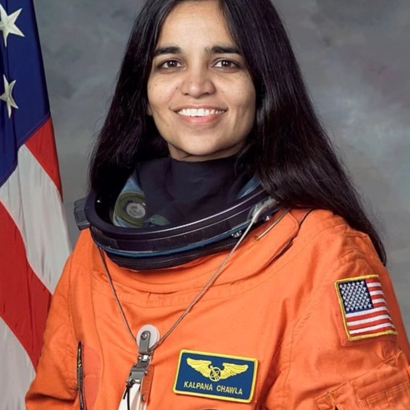
Kalpana Chawla, Ph.D.
Born in Karnal, India, Dr. Chawla studied aeronautical engineering before moving to the United States, where she became a citizen and continued her education. After completing her Ph.D. in 1988, she joined NASA’s Ames Research Center, where she focused on aircraft fluid dynamics. She contributed to developing the Robotic Situational Awareness Display, a system designed to assist astronauts in operating robotic arms, and also worked on testing space shuttle control software. Dr. Chawla made history in 1997 as the first woman of Indian and South Asian origin in space.
In 2003, Dr. Chawla and six fellow astronauts lost their lives when NASA’s Space Shuttle Columbia disintegrated during reentry, an event now known as the Columbia Shuttle Tragedy. It was her second mission—she was just 40 years old. Her legacy endures worldwide through numerous honors, including celestial landmarks, memorials, and institutions bearing her name, as well as a posthumous Congressional Space Medal of Honor. Beyond her achievements, Dr. Chawla carried with her a love of music and a deep sense of wonder, once sharing that viewing Earth from space made her feel connected not to one place, but to the entire solar system.
AANHPI Heritage Month is an opportunity to celebrate the rich histories, cultures, and contributions of Asian American, Native Hawaiian, and Pacific Islander communities, while also recognizing the vital role they play in shaping the future of STEAM. Innovators from these communities have driven breakthroughs in science, technology, engineering, arts, and mathematics, often overcoming barriers to make lasting global impact. By uplifting their stories, we not only honor their achievements but also inspire the next generation to see themselves as creators, problem-solvers, and leaders. Recognizing AANHPI voices in STEAM helps build a more inclusive, innovative, and equitable future for all.