 Skip Navigation


The Tech Celebrates Hispanic Heritage Month 2026
September 4, 2026
Highlighting STEAM leaders
- Related Topics:
- STEM,
- Tech Partners,
- In the Community
From September 15 to October 15, Hispanic Heritage Month invites us to honor the rich history, vibrant culture, and lasting contributions of Hispanic and Latine communities. The celebration kicks off on a date that marks the independence of several Latin American nations. Here at The Tech, we are thrilled to spotlight the incredible achievements of Latine STEAM leaders making waves both in our local community and globally.
STEM stands for science, technology, engineering, and math. While the "A" in STEAM usually stands for Art, it is increasingly recognized as representing Architecture, highlighting how the field beautifully merges structural engineering and mathematical precision with creative, human-centered design. We are incredibly grateful for the STEAM leaders in these fields who also dedicate their time and talent to community advocacy.
(*There are many terms for those whose identities are connected to Latin America and/or Spanish-speaking cultures. At The Tech, we first defer to individual preferences then use “Latine” as our default based on community feedback; it is both gender inclusive and rooted in the Spanish language.)

Dr. Ellen Ochoa
Dr. Ellen Ochoa is a historic pioneer in space exploration, best known for becoming the first Hispanic woman to travel into space in 1993. Over her impressive career with NASA, she flew on four separate space shuttle missions and logged nearly 1,000 hours in orbit. During these flights, she used her technical skills to operate robotic arms, deploy satellites, and study how the sun impacts Earth’s atmosphere. Her success in orbit proved her capabilities in high-pressure environments and solidified her status as a legendary figure in modern space exploration.
Beyond her time in astronaut gear, Ochoa is a highly successful engineer, inventor, and executive leader. Before ever flying into space, she earned a doctorate in electrical engineering from Stanford University and co-invented three patented optical systems, which helped computers "see" and check for manufacturing defects. She later transitioned from researcher to top executive, becoming the first Hispanic director and only the second female director of NASA's Johnson Space Center. Today, she continues to serve as a passionate advocate for STEM education, actively mentoring women and minority students to ensure the next generation of innovators is more diverse and inclusive.
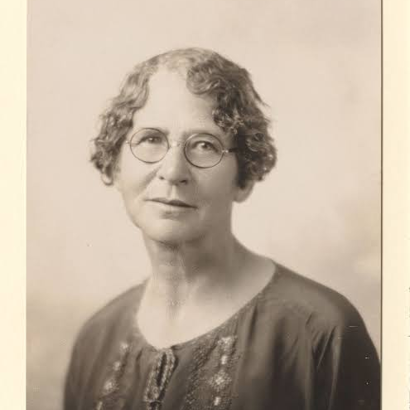
Ynes Mexia
Ynes Mexia was a trailblazing Mexican-American botanist who proved that it is never too late to make a massive impact in STEM. She did not even begin her scientific career until she was 55 years old, a time when most people are planning for retirement. Despite her late start in the early 20th century, Mexia became one of the most successful plant collectors in history. Traveling solo across dense forests, rugged mountains, and remote rivers throughout North and South America, she braved earthquakes, bogs, and dangerous terrain to collect samples for institutions like the University of California, Berkeley, and the Smithsonian.
Her innovations lay in her sheer productivity, meticulous preservation techniques, and scientific leadership. Over a 13-year career, Mexia collected nearly 150,000 plant specimens, a staggering number that expanded our understanding of biodiversity. Her efforts resulted in the discovery of over 500 new plant species, many of which were named in her honor. By navigating a male-dominated field with unmatched resilience and introducing rare ecosystems to the broader scientific community, Mexia shattered age and gender barriers, leaving a lasting legacy as a pioneer in environmental exploration and preservation.

José A. Valdés
José A. Valdés was a transformative STEM leader and educational innovator who dedicated his life to breaking down academic barriers for minority and low-income students. After fleeing communist Cuba and eventually returning to his passion for teaching, he joined Andrew P. Hill High School in San Jose, California, in 1974. Valdés was deeply troubled to find that Hispanic students were disproportionately placed in low-level, remedial math classes due to low expectations from administrators. He fiercely challenged this system, championing the belief that all students could excel in advanced math if given the proper tools, high expectations, and rigorous instruction.
To turn his vision into reality, he founded the José Valdés Math Institute™ in 1989. The institute focused on an innovative summer and year-round curriculum designed to accelerate middle schoolers so they could enter high school taking algebra, with the ultimate goal of passing advanced calculus before graduation. By providing free tutoring and high-quality instruction, Valdés created a powerful pipeline into college and STEM majors for over 30,000 alumni. Although he passed away in 1991, his legacy as a pioneer for educational equity lives on through the foundation that continues to empower underserved youth to achieve personal and academic excellence.

Ramiro Torres
Ramiro Torres is a prominent architect based in San Jose, California, who has made significant contributions to the local community through his design work. After graduating from California Polytechnic State University, San Luis Obispo, with a degree in architecture, he gained diverse industry experience. In 2007, following Silicon Valley's famous garage-startup tradition, Torres founded TOPA Architecture in his own home garage. His firm quickly found its calling by serving local Latino markets before expanding its reach to work with various faith-based organizations, civic groups, and educational institutions throughout the Bay Area.
One of Torres' most notable achievements includes the restoration and redesign of San Jose's historic Holy Cross Church, which suffered devastating damage from a fire in 2014. Working closely with local parishioners and the Diocese of San Jose, Torres created a modern interpretation of the church's original Italian style while thoughtfully incorporating rescued historic elements like stained glass windows and an exterior mosaic. Additionally, Torres has demonstrated a passion for preserving civic history by proposing a 25-million-dollar metal sculpture designed to replicate San Jose's historic 1881 Electric Light Tower in its original downtown location.
San Jose has a deeply rooted, vibrant Latine history—especially across the East Side and Downtown—making it an incredible place to celebrate Hispanic Heritage Month. If you are looking to support local Latine-owned businesses, cultural hubs, and community programs during the month (and year-round), here is a curated guide to making a local impact:
- The School of Arts and Culture at Mexican Heritage Plaza
- San José Public Library Programs
- Si Se Puede Collective
- Con Azúcar
- Panaderia Gudiño
- Tico Coffee Roasters
- LUNA Mexican Kitchen
- Mezcal
- Mexico Lindo
- Las Cazuelas
- Plaza Jewelers
- Reyes Muertos Klothing
Connect with the Hispanic Chamber of Commerce Silicon Valley for a more comprehensive look at minority-owned businesses. They act as a major bridge for small business grants, advocacy, and professional networking right here in the South Bay. The Tech Interactive proudly recognizes and celebrates the lasting contributions of the Latine community all year long!